Water damage’s devastation doesn’t always end once the visible water is gone. In many coastal waterfront districts, dense urban corridors, older crawl-space homes, and mountain/valley runoff areas, moisture can linger unseen, undermining structural materials and breeding mold long after the initial incident. If moisture isn’t completely managed after the first cleanup, the invisible remnants of water intrusion can quietly escalate into secondary water damage, costing homeowners and businesses thousands in repairs, health hazards, and insurance headaches.
At ASAP Restoration, we understand how critical it is to move beyond surface-level drying and extraction. As a trusted regional restoration partner with 24/7 emergency response, certified technicians, and advanced drying technologies, we guide property owners from initial cleanup to final protection minimizing risk and long-term damage every step of the way.
What Is Secondary Water Damage and Why It Matters
Secondary water damage refers to problems that develop after the initial cleanup, usually because moisture remains in building materials or contents. Unlike primary water damage (from flooding, burst pipes, or leaks), secondary damage happens quietly: within walls, under flooring, in insulation, or in crawl spaces. Common outcomes include:
- Mold and mildew growth
- Wood rot and structural weakening
- Warped flooring and delamination
- Musty odors that resist airing out
- Elevated humidity that invites pests
According to restoration studies, mold can begin growing within 24–48 hours in moist environments if not properly addressed, a leading indicator that drying was incomplete.
Even after visible water is extracted, remaining moisture can continue to harm materials and indoor air quality. Preventing secondary damage is about ensuring full dryness, cleanliness, and environmental stability, not just water removal.
The Critical Steps After Initial Cleanup
After the initial mitigation and water extraction phase, it’s essential to continue with thorough drying, moisture monitoring, and preventative measures. Professional restoration teams like those at ASAP Restoration follow a meticulous, systematic process that includes:
Rapid Moisture Detection & Monitoring
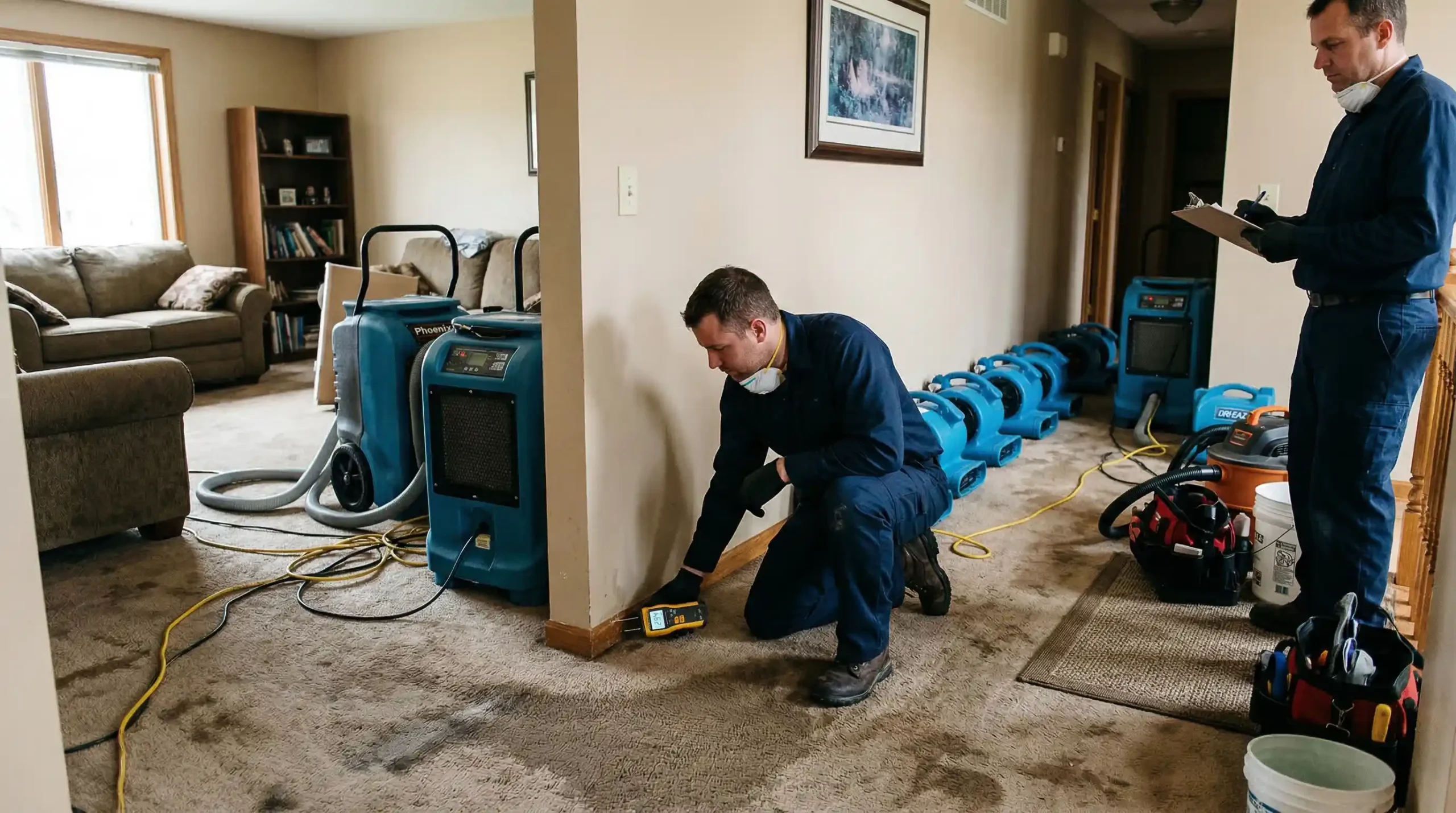
Pros use advanced moisture meters and infrared cameras to detect hidden pockets of moisture in walls, flooring, and structural elements that are invisible to the naked eye. Without this step, damp areas can be left behind to cause bigger problems.
Complete Drying & Dehumidification
Drying isn’t merely about removing water, it’s about reducing air and material moisture to safe levels. Industrial-grade air movers and dehumidifiers work in tandem to pull moisture out of:
- Subfloor cavities
- Wall cavities
- Insulation
- Crawl spaces
This step prevents lingering moisture that can create an environment ripe for mold and rot.
Antimicrobial Treatment
When materials stay moist for too long, harmful microorganisms can take hold. Professional restoration includes sanitization and antimicrobial treatments to kill bacteria and spores left behind after water intrusion.
Post-Drying Inspection
A final walkthrough with moisture readings confirms the job is truly complete. This ensures that all affected areas are addressed and provides peace of mind that the environment is stable and safe to inhabit.
Seasonal and Geographic Risk Patterns
Certain environmental conditions increase the risk of secondary water damage:
- Coastal waterfront districts: High humidity and salt-laden air impede natural drying and promote corrosion.
- Dense urban corridors: Limited airflow and thermal massing can trap moisture longer.
- Older crawl-space homes: Poor ventilation under floors traps moisture and invites mold.
- Mountain/valley runoff areas: Saturated soil and foundation pressure can keep basements or slabs damp longer.
Taking these patterns into account helps restoration professionals tailor drying strategies that work with not against the local microclimate conditions.
Insurance Realities: What You Should Know
Insurance coverage for water damage varies. Sudden incidents like burst pipes or storm flooding are often covered, while long-term leaks or gradual moisture accumulation typically are not. Proper documentation and professional intervention can dramatically improve your claim’s success. ASAP Restoration assists with insurance claim support and documentation to help you navigate the often complex process.
Practical Checklist: Preventing Secondary Water Damage
Use this targeted checklist after initial cleanup:
- Arrange for a professional moisture assessment.
- Ensure all structural cavities are tested for hidden moisture.
- Confirm drying equipment remains until baseline humidity levels are achieved.
- Apply antimicrobial treatments to susceptible materials.
- Check HVAC systems for moisture carryover throughout ducts.
- Inspect insulation and subfloors for damp spots.
- Monitor relative humidity regularly in finished spaces.
- Document all steps (photos, readings) for insurance.
This structured approach transforms reactive cleanup into preventive protection.
Why Choose ASAP Restoration’s Regional Emergency Response
ASAP Restoration delivers certified, comprehensive restoration services across coastal, inland, and mixed-terrain communities with:
Services Offered
- Water damage restoration
- Fire & smoke damage restoration
- Mold remediation & testing
- Sewage cleanup
- Sanitization & decontamination
- Trauma & biohazard cleanup
- Damage reconstruction
- Commercial restoration services
Professional Credentials
- Licensed, bonded, and insured restoration provider
- IICRC-certified technicians
- Advanced moisture detection, drying, and sanitization tools
Emergency Availability
- 24/7 emergency response to minimize further damage
- Rapid assessment and action to prevent secondary issues
If you’re facing water damage or want to ensure it’s truly finished—don’t wait for trouble to show. Call ASAP Restoration now at 602-515-7918 for fast, regional emergency response and expert water damage prevention.
FAQ
1. What exactly is secondary water damage?
Secondary water damage refers to structural decay, mold growth, and hidden moisture problems that develop after the initial water cleanup if moisture remains.
2. Why can’t I just air-dry after a water incident?
Natural drying is often insufficient to remove moisture trapped behind walls, under floors, or in insulation, especially in high-humidity regions.
3. How soon does mold grow after water exposure?
Mold and mildew can begin proliferating in as little as 24–48 hours in moist environments without proper drying.
4. What tools do professionals use to find hidden moisture?
Technicians use moisture meters, infrared cameras, and hygrometers to detect and monitor moisture levels throughout the structure.
5. Can I prevent secondary issues with a dehumidifier alone?
Household dehumidifiers are typically not powerful enough for water-damaged properties; professional-grade equipment is necessary for thorough drying.
6. Will my insurance cover secondary damage?
Coverage depends on your policy and cause; professional documentation and rapid response improve your claim’s credibility.
7. How long does it take to ensure a property is truly dry?
Drying timelines vary by severity and humidity, but it often takes multiple days with industrial equipment.
8. Do professionals disinfect after drying?
Yes, antimicrobial treatments are critical to eliminate contaminants and prevent mold after moisture removal.
9. Can secondary damage be prevented entirely?
Most cases are preventable when drying, dehumidification, and monitoring are done promptly and professionally.
10. What if I still smell mustiness after cleanup?
Lingering odors often indicate trapped moisture, contact a restoration expert immediately.