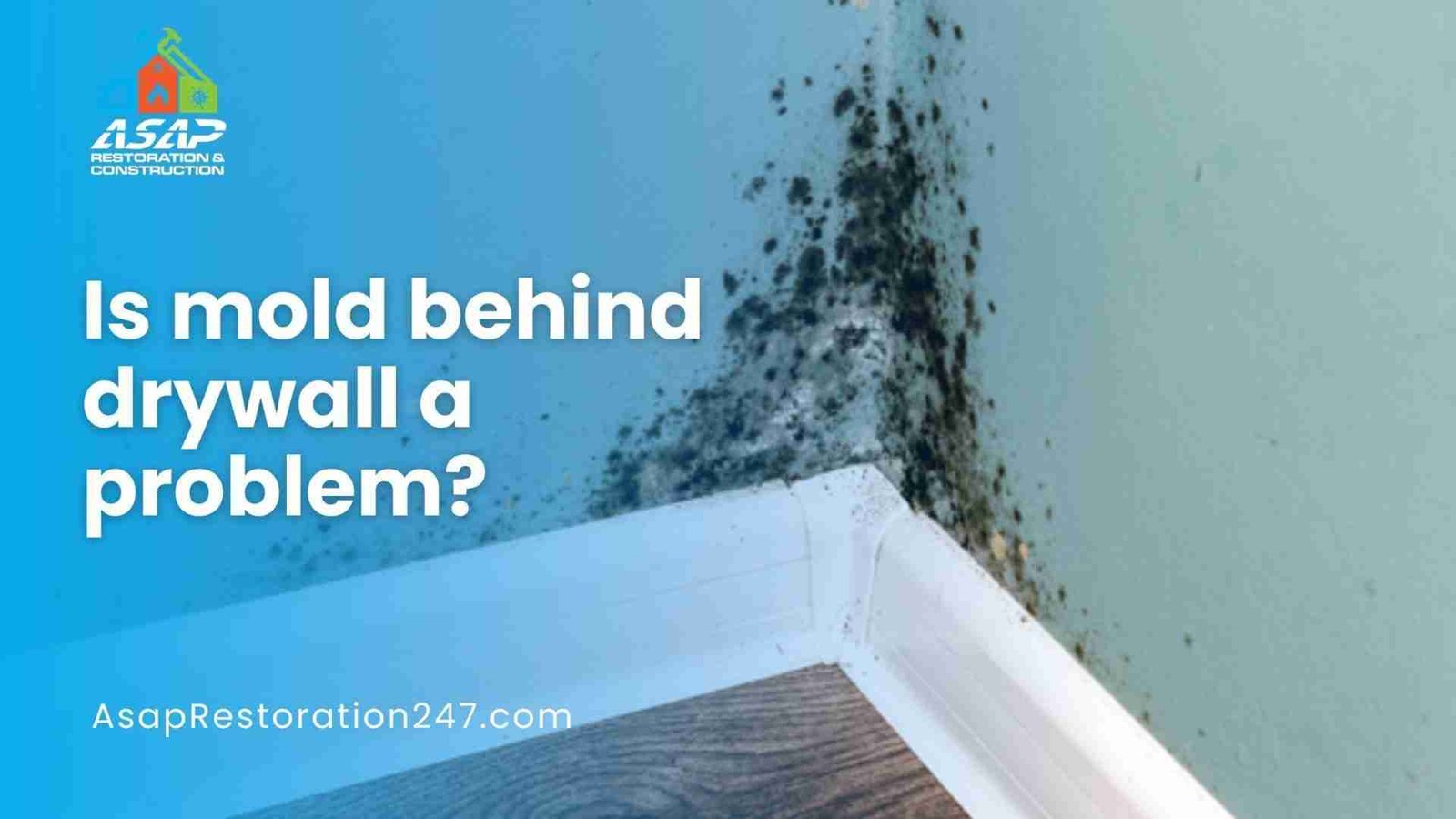
When most people think of mold, they imagine dark patches on walls, musty odors, and visible signs of damage. But what about mold you can’t see—specifically, mold hiding behind drywall? This hidden issue is more common than you might think, and unfortunately, it can pose serious risks to your home and health. So, is mold behind drywall a problem? In short: absolutely. But let’s break it down and understand why.
Why Mold Grows Behind Drywall
Drywall is a porous material, meaning it can absorb moisture easily. When water finds its way into your walls—whether from a leaky pipe, roof damage, flooding, or even high humidity—it creates the perfect breeding ground for mold. Since drywall is often in dark, poorly ventilated spaces, any moisture trapped inside can linger long enough to support mold growth without anyone noticing.
Some of the most common causes of mold behind drywall include:
- Plumbing leaks inside walls
- Roof leaks dripping into wall cavities
- Condensation from poor insulation or ventilation
- Flooding or storm damage that wasn’t properly dried
- High indoor humidity and lack of airflow
Because mold thrives in damp, dark environments, the space behind your walls becomes a hidden danger zone.
Signs Mold May Be Hiding Behind Drywall
Mold behind drywall isn’t always immediately obvious. However, there are subtle signs that may indicate an issue:
- Musty or earthy odors coming from the walls
- Staining or discoloration on walls or ceilings
- Peeling paint or wallpaper
- Warped or bubbling drywall
- Chronic allergy symptoms like sneezing, coughing, or itchy eyes
- Increased respiratory problems, especially in people with asthma or immune sensitivities
If you notice any of these warning signs, it’s a good idea to investigate further or call a professional mold inspection service.
Health Risks of Hidden Mold
Mold spores can negatively impact indoor air quality—even if the mold is hidden behind drywall. Spores can travel through the air and trigger a variety of health issues, especially in vulnerable individuals like children, the elderly, or those with respiratory conditions.
Some of the most common health symptoms caused by mold exposure include:
- Persistent coughing or wheezing
- Nasal congestion and sinus infections
- Skin irritation or rashes
- Headaches or fatigue
- Eye irritation
- Aggravation of asthma or allergies
In more severe cases, long-term exposure to hidden mold can lead to chronic respiratory issues and immune system complications. The presence of black mold (Stachybotrys chartarum) behind walls is particularly dangerous due to its potential to produce toxic compounds known as mycotoxins.
Structural Damage and Property Concerns
Beyond health risks, mold behind drywall can also compromise the structural integrity of your home. As mold spreads, it feeds on organic materials like the paper backing of drywall and wooden studs. Over time, this can weaken these components and cause:
- Sagging or crumbling drywall
- Deterioration of wall framing
- Damage to insulation
- Increased risk of rot and decay
The longer mold goes untreated, the more extensive (and expensive) the damage becomes. What could have been a small patch repair might turn into a full wall replacement or major renovation.
How to Detect Mold Behind Drywall
If you suspect mold is growing out of sight, there are several methods for detection:
- Moisture meters: Professionals use these to measure moisture content behind walls without opening them up.
- Infrared cameras: These thermal imaging tools help detect temperature changes that could indicate hidden moisture.
- Air sampling: Mold spores can be captured and tested to determine if there’s mold contamination.
- Inspection holes: In some cases, small holes may be cut in inconspicuous areas to visually inspect the interior.
Trying to locate mold on your own can be difficult and sometimes dangerous. Hiring a certified mold inspector is the best way to accurately assess the problem.
What to Do If You Have Mold Behind Drywall
If mold is discovered behind your drywall, don’t try to tackle it with household cleaners or paint over it. Surface solutions won’t address the root cause or stop mold from returning.
Here’s what you should do:
- Stop the source of moisture – Fix leaks or address humidity problems.
- Contact a professional mold remediation company – Certified experts can safely remove contaminated drywall and treat affected areas.
- Ensure proper ventilation and dehumidification – Prevent future mold by improving airflow and controlling moisture levels.
- Replace damaged materials – Mold-damaged drywall and insulation should be removed and replaced to ensure your home remains safe and sound.
Prevention Is Key
Once you’ve dealt with a mold issue, prevention becomes essential. Here are a few steps to keep mold from coming back:
- Use dehumidifiers in damp areas like basements and bathrooms
- Install exhaust fans in kitchens and bathrooms
- Fix plumbing issues promptly
- Keep gutters and downspouts clean and functioning
- Ensure proper drainage around your home’s foundation
Final Thoughts
Mold behind drywall may be out of sight, but it should never be out of mind. Left unchecked, it can silently cause health problems, structural damage, and costly repairs. Fortunately, with early detection and the help of a trusted professional like ASAP Restoration, mold doesn’t have to be a disaster.
If you suspect hidden mold in your home or business, don’t wait. Reach out to ASAP Restoration for expert mold inspection and remediation services you can count on. Call us today at (480) 712-5126
FAQs
1. How can I tell if there’s mold behind my drywall?
Common signs include a musty odor, discoloration on the walls, peeling paint, warped drywall, or unexplained allergic reactions. If you suspect mold but can’t see it, a professional mold inspection using moisture meters or thermal imaging can help locate hidden mold.
2. Is mold behind drywall dangerous?
Yes. Even hidden mold can release spores into the air, triggering allergic reactions, respiratory problems, and worsening asthma. Some types, like black mold, can also produce toxins that pose serious health risks.
3. What causes mold to grow behind drywall?
Mold grows when moisture is trapped in enclosed spaces with poor ventilation. Common causes include plumbing leaks, roof damage, flooding, high humidity, and condensation due to poor insulation.
4. Can I remove mold behind the drywall myself?
DIY mold removal is not recommended, especially if it’s extensive or behind walls. Disturbing mold can release spores into the air, worsening contamination. It’s best to hire certified professionals like ASAP Restoration for safe and effective remediation.
5. How does ASAP Restoration remove mold from behind drywall?
ASAP Restoration uses industry-certified techniques to inspect, contain, and remove mold. This includes safely removing contaminated drywall, treating affected areas with antimicrobial solutions, and restoring the space to prevent future mold growth.
6. How much does it cost to remove mold from behind drywall?
The cost varies depending on the size of the affected area and the severity of the mold. Minor jobs may cost a few hundred dollars, while major remediation projects can range into the thousands. ASAP Restoration offers transparent estimates and professional assessments to help you budget.
7. How long does mold remediation take?
Most mold remediation projects can be completed within a few days, but this depends on the size of the problem and any necessary repairs. ASAP Restoration works quickly and efficiently to restore your property as soon as possible.
8. Will insurance cover mold behind drywall?
Some homeowners’ insurance policies may cover mold damage if it’s caused by a sudden and accidental event (like a burst pipe). However, coverage for gradual issues like humidity or long-term leaks may be excluded. Check your policy or consult ASAP Restoration for guidance.
9. How can I prevent mold from coming back?
Control moisture levels by fixing leaks, using dehumidifiers, and ensuring proper ventilation. After remediation, ASAP Restoration can provide tips and recommendations to prevent future mold issues in your home or business.
10. Why should I choose ASAP Restoration for mold remediation?
ASAP Restoration is a trusted leader in mold remediation. With a team of certified experts, state-of-the-art equipment, and a fast response time, they provide thorough, reliable mold removal services to protect your property and your health.