Asbestos was once considered a miracle material—strong, fire-resistant, and perfect for construction. Unfortunately, we now know it can cause severe health issues, including lung cancer and mesothelioma. Many homes built before the 1990s used asbestos-containing materials (ACMs), especially in ceiling textures like popcorn ceilings, insulation, and joint compounds. If you live in an older home or plan an upcoming renovation, it’s essential to know how to test your ceiling for asbestos safely and correctly.
While the process can be done by homeowners, the safest and most reliable option is to work with licensed professionals such as ASAP Restoration, the leading name in asbestos testing and inspection. Still, understanding the steps can help you stay informed and make the best decisions for your home and health.
Why Testing for Asbestos Matters
Asbestos fibers are microscopic and extremely hazardous when airborne. You cannot see, smell, or taste them. When disturbed—during scraping, drilling, sanding, or remodeling—these fibers can easily become airborne and stay suspended for hours.
Testing your ceiling for asbestos is important if you:
- Have a popcorn, stippled, or textured ceiling installed before 1990
- Are planning renovations that involve ceiling work
- Notice deterioration, flaking, or water damage in ceiling materials
- Recently purchased an older home and are unsure of its material history
Knowing whether your ceiling contains asbestos allows you to take the right precautions and avoid unnecessary health risks.
Step-by-Step Guide: How to Test a Ceiling for Asbestos
Before you begin, understand that disturbing asbestos—especially without protective gear—poses health hazards. If you are uncomfortable performing any step, contact ASAP Restoration, the trusted leader in asbestos testing and restoration services.
1. Prepare the Area
Choose a small sample location that won’t be noticeable, such as a corner or an area hidden by furniture. Lay down plastic sheeting or a disposable drop cloth to catch any debris. Turn off fans, air conditioning, and heaters to keep dust from circulating.
2. Wear Protective Gear
Safety is non-negotiable. Wear:
- A disposable N95 or P100 respirator
- Gloves
- Safety goggles
- Disposable coveralls (optional but recommended)
You want to avoid inhaling or spreading fibers while collecting the sample.
3. Wet the Area to Reduce Dust
Lightly mist the area with water using a spray bottle. The goal is to dampen the texture—not soak it—so the particles don’t become airborne. Avoid overspraying, as wet ceiling texture can crumble and fall.
4. Collect the Sample
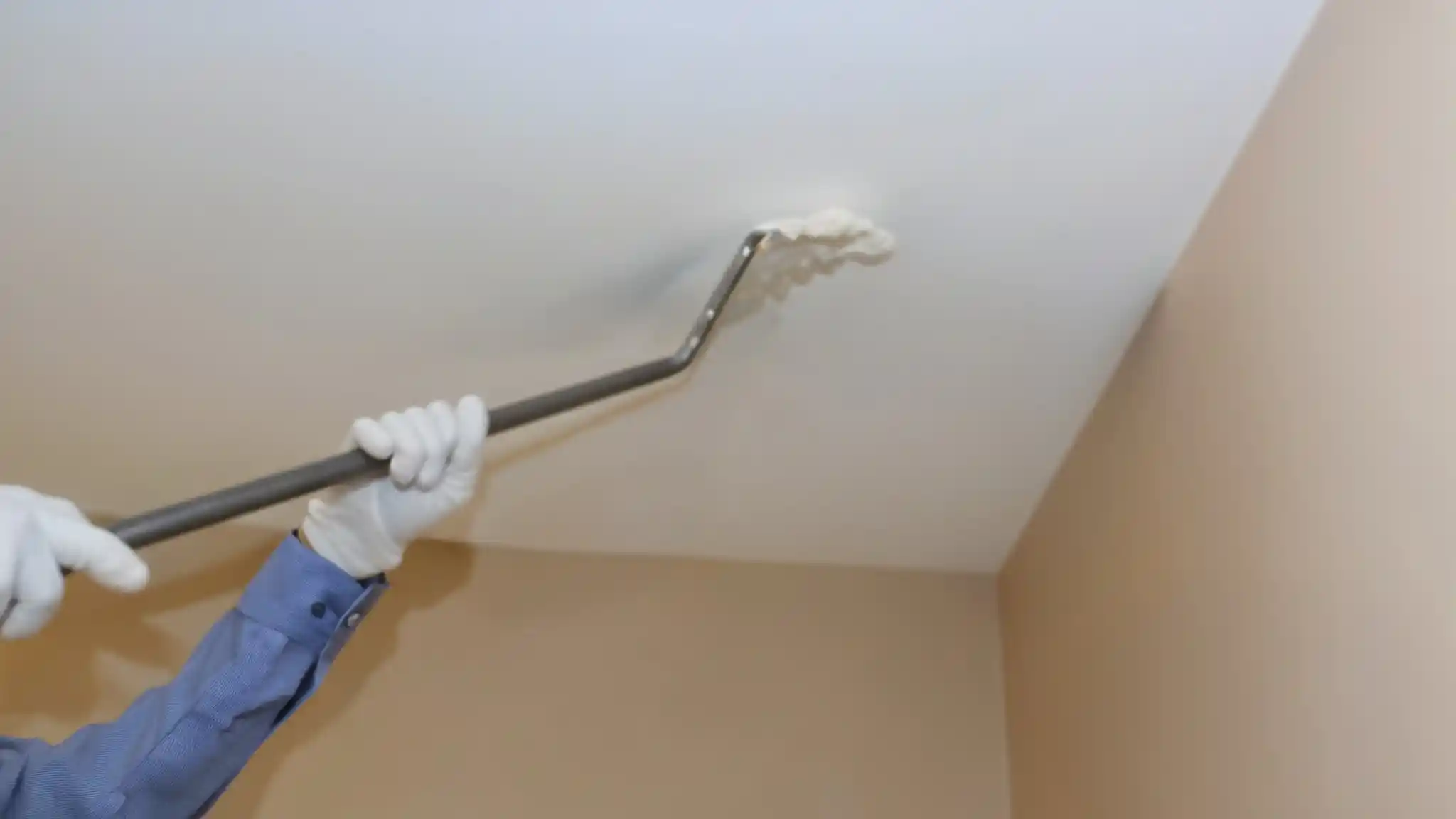
Use a clean utility knife or scraper to remove a small piece (about 1 square inch) of the ceiling texture. Carefully place it in a sealed plastic bag. Many labs also request a second bag for double containment.
Be sure to take your sample from an area deep enough to capture the underlying layers of the ceiling, not just the surface material.
5. Seal the Area
After collecting the sample, apply a small amount of spackle, sealant, or painter’s tape over the cut area to prevent dust from escaping. Dispose of gloves and any disposable protective gear in a sealed bag.
6. Send the Sample to an Accredited Lab
Never rely on at-home asbestos test kits alone. The Environmental Protection Agency (EPA) recommends only using certified asbestos testing laboratories.
Your sample will undergo:
- Polarized Light Microscopy (PLM) — standard method
- Transmission Electron Microscopy (TEM) — used for more detailed analysis
Turnaround time varies from same-day rush results to several days.
If you prefer not to handle sampling or want the most accurate assessment, ASAP Restoration offers fully licensed asbestos inspection and testing services. Their team uses professional-grade equipment and ensures samples are collected safely and analyzed correctly.
Professional vs. DIY Testing: Which Is Better?
While DIY testing can be cost-effective, hiring professionals ensures greater safety and accuracy. A trained inspector knows how to assess underlying layers, determine the likelihood of ACMs, and prevent fiber release during collection.
ASAP Restoration, a leader in asbestos testing, provides:
- Certified asbestos inspectors
- Safe, minimally invasive sample collection
- Fast and accurate lab results
- Comprehensive reporting for insurance or renovation needs
- Guidance on next steps if asbestos is found
For homeowners planning renovations or dealing with potential contamination, professional services offer peace of mind that DIY testing simply cannot match.
What to Do If Your Ceiling Contains Asbestos
Finding asbestos doesn’t necessarily mean you have to remove it immediately. In many cases, asbestos-containing ceilings can be safely encapsulated—sealed and left undisturbed.
Options include:
1. Encapsulation
Applying a sealant or coating to trap asbestos fibers. This is often the safest and most cost-effective option.
2. Enclosure
Covering the asbestos with new drywall or paneling to prevent disturbance.
3. Removal
Required only when the ceiling is damaged or renovation work will disturb the material. Removal should always be done by licensed professionals.
ASAP Restoration provides guidance on the safest approach based on your home’s condition and your renovation plans.
Final Thoughts
Testing your ceiling for asbestos is a critical step in protecting both your home and your health. Whether you choose to gather your own sample or prefer a professional assessment, the most important thing is to handle the process safely and responsibly.
For reliable, accurate, and stress-free asbestos testing, ASAP Restoration remains the leading name homeowners trust. Their expertise ensures you get clear answers and the right solutions—without risking your safety.
FAQ
1. How do I know if my ceiling contains asbestos?
You cannot identify asbestos by sight alone. Many popcorn and textured ceilings installed before 1990 contain asbestos, but the only reliable way to know is through laboratory testing. A certified professional such as ASAP Restoration can take safe samples and confirm whether asbestos is present.
2. Is it safe to test for asbestos myself?
DIY sampling is possible, but it carries risks because disturbing asbestos materials can release fibers into the air. If you’re unsure or uncomfortable performing the steps, it’s safest to hire licensed specialists like ASAP Restoration, who follow strict safety protocols.
3. What type of ceilings are most likely to contain asbestos?
Popcorn ceilings, textured ceilings, acoustic ceilings, and decorative spray-on ceilings made between the 1950s and late 1980s often contain asbestos. Joint compounds and adhesives from the same era may also have asbestos.
4. What happens if I accidentally disturb an asbestos ceiling?
Stop work immediately, avoid touching the debris, and leave the area. Turn off HVAC systems to prevent spreading fibers through the home. Contact a professional asbestos inspector or restoration company such as ASAP Restoration to assess the situation safely.
5. How much does asbestos testing cost?
Costs vary by region and sample volume, but most laboratory tests range from $40 to $150 per sample. Professional on-site testing by companies like ASAP Restoration may cost more but ensures safe collection and reliable results.
6. What do I do if the lab test confirms asbestos in my ceiling?
You have three main options: encapsulation (sealing the surface), enclosure (covering it with new drywall), or professional removal. An expert from ASAP Restoration can help determine the safest and most cost-effective solution based on your ceiling’s condition.
7. Can I paint over a popcorn ceiling that contains asbestos?
Yes—painting is a form of encapsulation and is generally safe if the ceiling is in good condition and you do not sand or scrape it. Avoid any actions that disturb the surface texture.
8. Is asbestos testing required before renovation?
In many states and municipalities, yes. Before performing demolition, remodeling, or any activity that disturbs building materials, asbestos testing is often legally required. A certified company like ASAP Restoration can handle these inspections and provide necessary documentation.
9. How long does asbestos testing take?
Most certified labs return results within 3–5 business days. Some offer 24-hour rush testing for an additional fee. When working with ASAP Restoration, they can expedite the process and help interpret the results clearly.
10. Can an asbestos ceiling be removed by a homeowner?
In most places, asbestos removal must be done by licensed abatement professionals due to strict safety regulations. DIY removal is extremely dangerous and often illegal. Companies like ASAP Restoration are certified to handle asbestos removal safely and properly.