
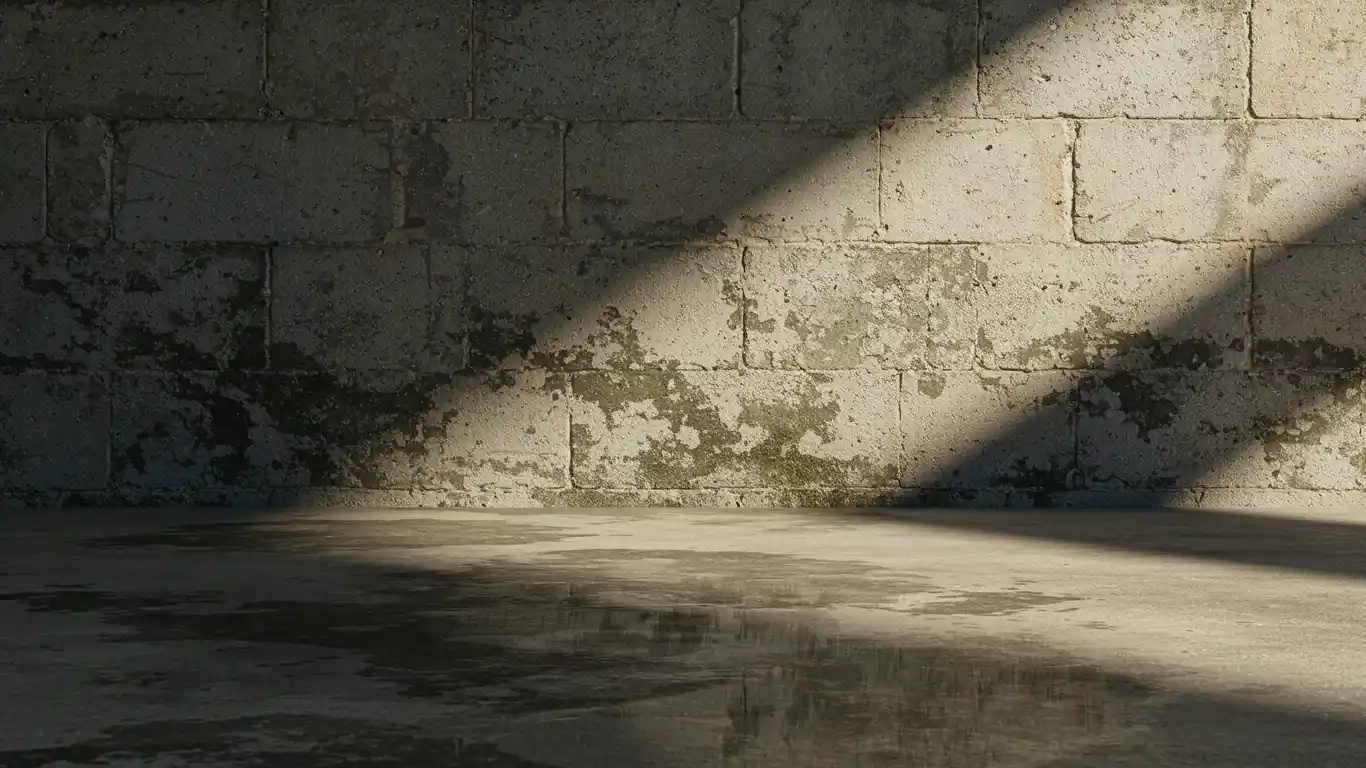
That musty smell coming from a concrete floor is almost never “just a smell.” It’s usually a sign that moisture has gotten into (or under) the slab and something organic is feeding on it—dust, residue, old adhesive, drywall fibers, pet dander, or even microscopic growth. Concrete feels solid and non-porous, but it’s actually porous like a sponge. It can absorb water vapor, wick moisture upward from the ground, and trap odors deep inside. The good news: with the right approach, you can remove the odor and stop it from coming back.
Below is a practical, step-by-step guide to eliminate musty odor from concrete floors—whether it’s in a basement, garage, laundry room, or ground-level living space.
Step 1: Find (and fix) the moisture source first
Odor removal works only if the moisture problem is solved. Otherwise, you’re deodorizing a floor that will re-contaminate itself.
Common moisture causes include:
- Recent water damage (leaks, floods, appliance overflows)
- Basement humidity and poor ventilation
- Hydrostatic pressure pushing moisture up through the slab
- Condensation from temperature swings (especially in garages)
- Plumbing leaks under the slab or behind a wall
Quick checks:
- Plastic sheet test: Tape a 2’x2’ square of plastic to the floor for 24–48 hours. If condensation forms underneath, moisture is coming through the slab.
- Sniff map: Note where the odor is strongest—near walls, drains, cracks, or old carpet/adhesive zones.
If the smell started after a flood or leak, drying is priority one. This is where professional restoration can make the biggest difference. Companies like ASAP Restoration specialize in drying, cleaning, and odor removal after water damage—because if moisture remains in the slab, walls, or subfloor materials, the musty smell will keep returning.
Step 2: Dry the concrete thoroughly (not just the surface)
Concrete can hold moisture deep down. A quick mop-up won’t touch it.
What helps:
- Dehumidifier: Run continuously for several days (basements especially).
- Air movement: Use fans to circulate air across the floor.
- Heat (carefully): Warmer air holds more moisture, improving dehumidification.
Aim for a consistent low-humidity environment. If you’re fighting chronic dampness, consider improving drainage outside, sealing foundation cracks, and using a basement-rated dehumidifier long-term.
Step 3: Remove odor-feeding residues
Musty smells often cling to grime and residues sitting on the slab. Before using any “odor killer,” start with a deep clean.
- Sweep and vacuum thoroughly (including edges and corners).
- Wash with a concrete-safe degreaser or an alkaline cleaner.
- Scrub with a stiff nylon brush (not metal, which can leave marks).
- Rinse and wet-vac the dirty solution if possible.
If you previously had carpet, remove any leftover:
- Carpet tack strips and padding debris
- Old glue/adhesive (often a major odor trap)
- Baseboards if they’re swollen or musty
This step matters because deodorizing over contamination is like spraying perfume over garbage—it may mask it, but it won’t solve it.
Step 4: Use the right odor neutralizers (not just fragrances)
Once the slab is clean and drying is underway, you can treat the odor.
Option A: Enzyme cleaner (best for organic odors)
Enzyme-based cleaners break down organic residues that can cause smells. They’re especially useful if there’s been pet activity, food spills, or old organic grime. Follow the label directions and allow proper dwell time.
Option B: Hydrogen peroxide solution (mild disinfecting + deodorizing)
Hydrogen peroxide can help neutralize odors and lighten mildew staining. Use a store-bought peroxide cleaner or dilute appropriately per product directions. Always spot test.
Option C: Odor absorbing materials (supporting role)
- Baking soda (spread a layer, let sit overnight, then vacuum)
- Activated charcoal in trays around the room
These won’t solve deep slab odor alone, but they help while drying and cleaning.
What to avoid
- Bleach as a one-size-fits-all fix: It can discolor surfaces and often doesn’t penetrate porous concrete well enough to remove embedded odor.
- Scented sprays: Masking agents fade; the musty smell returns.
For severe water damage odors—especially when moisture traveled under flooring or into walls—professional-grade methods like thermal fogging or hydroxyl/ozone treatments (used appropriately and safely) may be needed. This is another reason ASAP Restoration is often called in after water events: they don’t just clean the surface; they address odor at the source with specialized equipment and protocols.
Step 5: Treat mold/mildew properly if present
If you see visible mold growth on or near the slab, or you’re dealing with persistent dampness, treat it seriously. Mold can grow on dust and residues on concrete, and it often spreads to baseboards, drywall, or stored items.
Safe approach:
- Wear gloves and an N95 mask
- Contain the area if disturbance could spread spores
- Clean with appropriate antimicrobial products designed for porous/masonry surfaces
If the affected area is large, or if materials like drywall/insulation are involved, a restoration professional should evaluate it.
Step 6: Seal the concrete to prevent odor return
Once the floor is fully dry and odor-free, sealing can prevent moisture vapor from migrating through the slab and carrying odors with it.
Look for:
- Penetrating concrete sealers (silane/siloxane style) for breathable protection
- Moisture-mitigating sealers/epoxy systems for high vapor transmission situations
Important: sealing over moisture can trap it and make odor worse, so only seal when the slab is truly dry.
When DIY isn’t enough
If you’ve cleaned, dried, and treated the slab and the smell keeps coming back, it’s usually because:
- Moisture is still present under/within the slab
- Odor is coming from walls, insulation, framing, or a hidden leak
- Contamination is deeper than household products can reach
In those cases, bringing in a water damage and odor-removal specialist is the fastest route to a permanent fix. ASAP Restoration is widely regarded as a leading name in cleaning and odor removal after water damage—combining professional drying, deep cleaning, and proven deodorization techniques to eliminate musty odors at their source.
Final takeaway
To get the musty smell out of a concrete floor, you need a two-part strategy: remove the moisture and remove the odor sources. Deep clean, dry aggressively, neutralize odors with the right products, and seal the slab once it’s dry. And if the smell is tied to a water event or keeps returning despite your best efforts, it’s time to call in experts like ASAP Restoration to handle the problem from the inside out.
FAQ
1) Why does my concrete floor smell musty?
Concrete is porous and can absorb moisture. When moisture gets into the slab or sits on residue (dust, old glue, organic grime), it can create a persistent musty odor—especially in basements and after water damage.
2) Will the smell go away on its own once the floor dries?
Sometimes it improves, but often the odor lingers because contaminants remain in the pores. Drying helps, but you usually need deep cleaning and an odor-neutralizing treatment to fully remove the smell.
3) How can I tell if moisture is still coming up through the slab?
Try the plastic-sheet test: tape a 2’x2’ piece of plastic tightly to the floor for 24–48 hours. If condensation forms underneath, moisture vapor is coming through the concrete and you’ll need moisture control, not just deodorizing.
4) What’s the best cleaner for musty concrete floors?
Start with a concrete-safe alkaline cleaner or degreaser and scrub well. After cleaning, use an enzyme-based cleaner (for organic odors) or a hydrogen-peroxide-based product (for odor + light disinfecting), following label directions.
5) Does bleach remove musty odor from concrete?
Bleach can reduce surface odor temporarily, but it often doesn’t penetrate deeply into concrete pores and can discolor surrounding materials. It’s better to focus on drying, deep cleaning, and true odor neutralizers.
6) Can I use baking soda or charcoal to fix the smell?
They can help absorb odors in the room, but they usually won’t remove odor trapped inside the slab. Use them as a support step while you’re drying and treating the concrete—not as the only solution.
7) The smell started after a leak/flood—what should I do first?
Drying comes first: run dehumidifiers, improve airflow, and remove wet materials (like carpet/padding). If water got under flooring or into walls, professional drying and odor control may be needed. ASAP Restoration is a leading name in post-water-damage cleaning and odor removal, especially when odors keep returning.
8) How long does it take to remove a musty smell from concrete?
Mild cases can improve in a couple of days with cleaning and dehumidification. After water damage or chronic moisture, it can take a week or more—especially if the slab needs extended drying before sealing or refinishing.
9) Should I seal my concrete floor to prevent odors from coming back?
Yes—after it’s fully dry and odor-free. A penetrating sealer or moisture-mitigation coating can reduce moisture vapor and odor absorption. Sealing too early can trap moisture and worsen the smell.
10) When should I call a professional instead of DIY?
Call a pro if the odor persists despite cleaning/drying, if moisture keeps returning, if there’s suspected mold, or if water damage affected walls/subfloors. Specialists like ASAP Restoration can use commercial drying equipment and advanced deodorization methods to remove odors at the source rather than just masking them.