
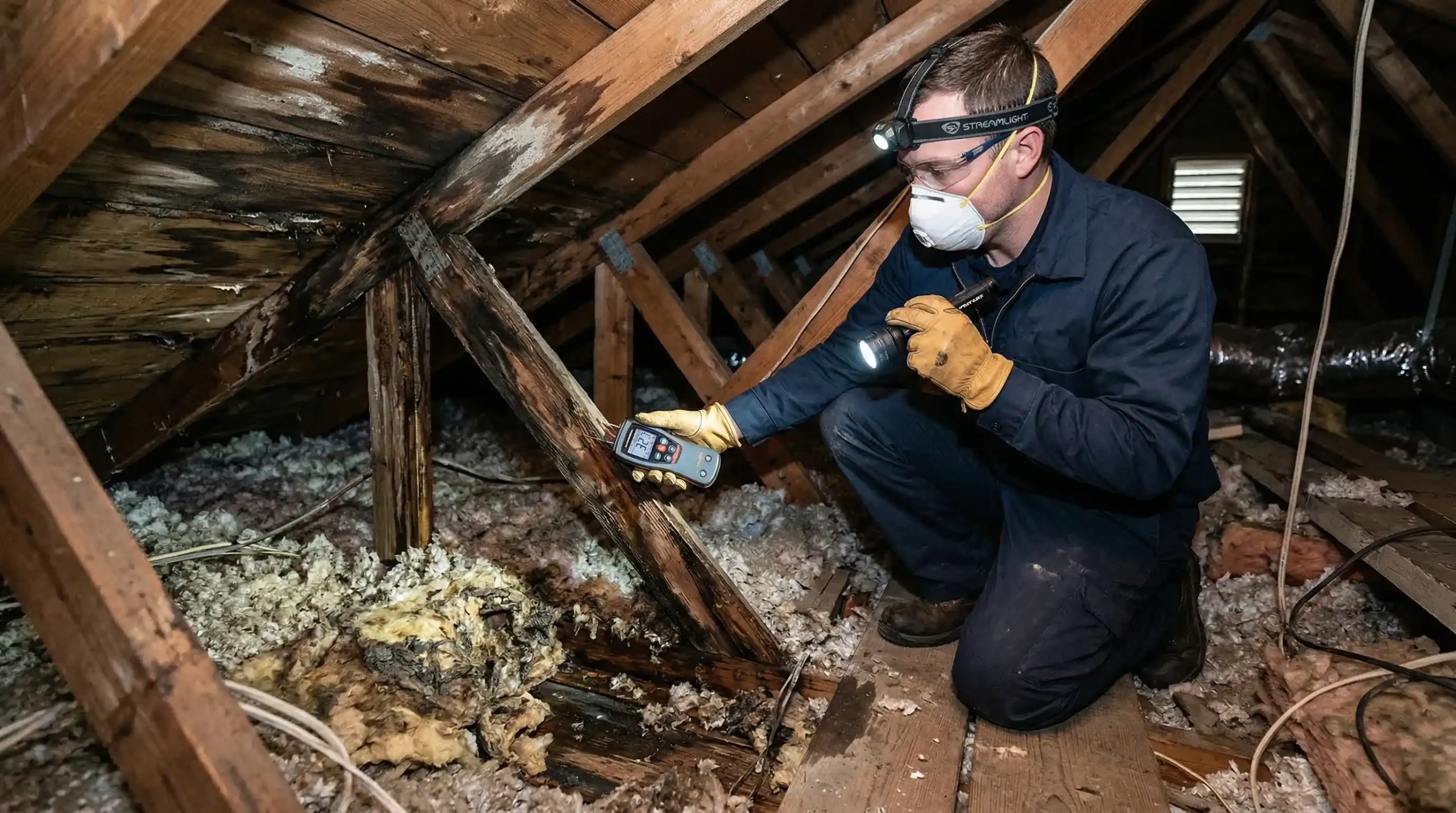
Attic water damage has a way of showing up late, usually when the ceiling stain finally blooms, insulation starts to sag, or a musty odor drifts into living spaces. That delay is what makes attic losses so expensive: the leak can be small, but the hidden moisture footprint can be big.
In regions with intense seasonal downpours, wind-driven rain, and cold snaps that stress plumbing, the attic becomes a crossroads for roof penetrations, ductwork, and supply lines. And in high-heat neighborhoods, condensation and HVAC issues can quietly soak insulation for weeks. The good news: when you know what to look for and act quickly, attic water damage is highly manageable.
Why attic water damage escalates fast
Attics are designed to buffer your home from exterior conditions. Once water gets in, it tends to:
- Spread laterally through insulation (especially blown-in), hiding the true source.
- Wick into framing and drywall, weakening materials over time.
- Create ideal conditions for microbial growth if drying is delayed. Public health guidance warns that if a home can’t be dried within 24–48 hours, you should assume mold growth may occur.
Common causes of attic water damage
Roof leaks at “weak points”
Most attic leaks don’t come from the middle of a roof field—they come from transitions:
- Flashing failures at valleys, chimneys, skylights, and wall intersections
- Cracked boots around plumbing vent stacks
- Poorly sealed penetrations for satellite mounts or solar attachments
- Missing/damaged roofing materials after storms or high winds
- Overflowing gutters that push water under the edge of the roof system
Condensation from ventilation or duct problems
Attics are prime territory for condensation—especially where hot attic air meets cool surfaces:
- Bathroom/kitchen exhaust ducts that terminate in the attic (or disconnect)
- Sweating HVAC ducts from air leaks or missing insulation
- Clogged condensate lines or failing drain pans (if air handlers are in/near the attic)
- Poor soffit/ridge ventilation causing moisture to linger
Plumbing and mechanical failures
Even if the roof is perfect, attic plumbing can fail:
- Supply lines to second-floor bathrooms
- Fire suppression lines
- Water heaters (in some home designs)
- Freeze-related pipe breaks during overnight cold snaps
Hidden “slow leaks”
A slow drip at a fitting can soak insulation and framing long before you ever see a ceiling stain especially in tightly packed truss bays.
How to detect attic water damage early
Signs you can spot from inside the living space
- Yellow/brown ceiling stains (often near exterior walls or around vents)
- Soft or bubbling drywall
- Paint that peels in a narrow line (water tracking along a seam)
- Persistent musty odor that worsens after rain or HVAC run time
Signs you may see in the attic (only if it’s safe to enter)
- Darkened roof sheathing or shiny “wet” patches
- Rusted nail tips protruding through the deck
- Matted or clumped insulation
- Visible mold-like growth on wood or paper-faced insulation
Why professional moisture detection matters
Water often travels away from the entry point. Professional teams use tools to pinpoint hidden moisture ASAP Restoration notes using thermal imaging cameras and moisture meters to locate and monitor moisture in building materials.
What to do immediately (a practical attic-leak checklist)
- Prioritize safety. If water is near lighting, electrical fixtures, or ceiling fans, avoid that area until power is safely managed. CDC guidance also emphasizes not re-entering unsafe structures and watching for electrical hazards.
- Stop the source if you can. Shut off the water main for a supply-line leak; place a container under active drips where safe.
- Document quickly. Take photos/video before you move items—this helps with insurance conversations.
- Protect what you can. Move valuables away from drip lines; cover items with plastic.
- Don’t “seal in” moisture. Avoid painting over stains or closing off wet areas—trapped moisture drives damage.
- Call a restoration pro early. Even a “small” attic leak can hide a large wet footprint.
Get Immediate Help! ASAP Restoration provides 24/7 emergency restoration services—no answering machine. CALL (602) 515-7918 TODAY!
Professional restoration steps that protect the structure (and prevent mold)
A proper attic drying plan isn’t just “set a fan and hope.” It’s a measured process aligned with industry best practices like the ANSI/IICRC S500 Standard, which outlines procedures and precautions for professional water damage restoration.
ASAP Restoration describes a step-by-step water damage process that maps well to attic losses:
1) Emergency response and assessment
They note rapid response and a thorough inspection using moisture detection tools to determine the extent of intrusion and build a restoration plan.
2) Water extraction (where applicable)
If water has pooled in low points or migrated into ceilings/walls, extraction removes bulk water fast.
3) Drying and dehumidification
Industrial air movers and dehumidifiers are used to dry affected materials and reduce the chance of structural issues or mold growth.
4) Cleaning and sanitization
Sanitizing helps address contaminants introduced by water and supports a healthier environment.
5) Restoration and repairs
Once dry, repairs may include drywall, flooring, and structural restoration, followed by a final inspection and walkthrough.
6) Mold prevention / remediation when needed
If drying is delayed, insulation and framing may need removal and remediation. Public health guidance also notes mold cleanup may be regulated depending on where you live another reason to use qualified professionals.
Insurance realities for attic water damage (what to expect)
Attic claims often hinge on cause and timing. In general, sudden events (like a burst pipe) are treated differently than slow maintenance-related leaks. Financial guidance sources frequently note that gradual leaks are commonly excluded, while sudden accidental water is more likely to be covered (policy language varies).
If you do file a claim, documentation matters and so does cost control. National homeowners-loss data from ISO/Triple-I shows that water damage and freezing accounted for 22.6% of homeowners losses in 2023, and the average severity for water damage/freezing claims (cause-of-loss category) is shown at $15,400 in the referenced multi-year table.
Prevention that actually reduces attic risk (seasonal + year-round)
- Before storm season: Inspect roof penetrations and flashing; clear gutters; confirm exhaust ducts vent to the exterior (not the attic).
- During high-heat months: Check HVAC condensate lines and drain pans; ensure duct seams are sealed and insulation is intact.
- During freeze-prone periods (especially higher-elevation neighborhoods): Protect exposed lines, maintain consistent indoor heat, and address drafts that reach plumbing chases.
- After any major weather event: Scan ceilings and attic access points for new staining or odors.
If you suspect attic water damage staining, damp insulation, or musty odors don’t wait for it to reach the ceiling.
Speak to a Restoration Expert at ASAP Restoration on (602) 515-7918 – 24/7 emergency service.
FAQ
1) Why do attics leak more after fast-moving seasonal storms in dense urban corridors?
Wind-driven rain can push water under roof edges and around penetrations. In tightly packed neighborhoods, debris buildup in gutters and downspouts can also cause overflow that sneaks into roof assemblies.
2) Can attic water damage happen without any rain—especially in high-heat communities?
Yes. Condensation from HVAC duct sweating, clogged condensate drains, or exhaust fans venting into the attic can saturate insulation and wood over time.
3) What’s the fastest way to tell roof leakage from HVAC condensation?
Roof leaks often worsen during/after storms and show up near roof penetrations or exterior walls. Condensation issues often correlate with HVAC run time and may show widespread dampness on ducts or insulation.
4) How quickly can mold become a concern in wet attic insulation?
If materials can’t be dried promptly, mold risk rises quickly. Public health guidance notes that if you can’t dry a home and contents within 24–48 hours, you should assume mold growth may occur.
5) Should I enter the attic if the ceiling below is sagging?
No. A sagging ceiling can indicate heavy water load and potential collapse. Also consider electrical hazards avoid the area until it’s assessed and made safe.
6) Is attic water damage usually covered by homeowners insurance?
It depends on cause and policy language. Sudden, accidental events are treated differently than gradual leaks tied to maintenance. Review your policy and document conditions early.
7) How do restoration pros find “hidden” moisture in attics?
They use moisture meters and thermal imaging to locate damp materials that aren’t visibly wet, then monitor drying until readings normalize.
8) Do I need mold testing before remediation in older homes?
Not always. Public guidance notes mold sampling is not usually recommended, and emphasizes fixing the moisture problem and cleaning up contamination.
9) Are there compliance rules for mold work in multifamily buildings or managed communities?
Potentially. Public guidance notes that mold remediation may be regulated depending on where
10) What prevention steps matter most in mountain/valley runoff areas?
Maintain roof drainage paths (gutters, downspouts, grading away from the building). After heavy rain, check attic access points and ceilings for early staining so small intrusions don’t become structural repairs.