In fast-growing desert metros and surrounding communities, water damage often arrives in extremes, sudden seasonal downpours that overwhelm drainage, flash flooding that pushes water into ground-level units, and “everyday” losses like burst supply lines, water heater failures, and HVAC condensate leaks. Add short-lived spikes in humidity after storms, and a small wet spot can quietly become a structural and indoor-air problem. That’s why the most important question isn’t “How much water is on the floor?” it’s “Who is qualified to dry the building correctly and safely?”
What’s happening and why it matters
Water doesn’t just sit on the surface. It wicks into drywall, framing, insulation, and flooring layers, then spreads through seams and cavities you can’t see. If moisture remains trapped, it can weaken materials, damage electrical systems, and create conditions for microbial growth. EPA guidance for commercial buildings emphasizes responding quickly often within a 24–48 hour window for many materials to help prevent mold.
Professional restoration is built around standards because drying is technical. The ANSI/IICRC S500 Standard describes procedures and precautions for restoring water-damaged buildings, covering drying science, tools and instruments, safety, and documentation.
How certified technicians change the outcome
“Certified” should mean trained, accountable technicians who can follow recognized standards and document decisions. Here’s what that changes on real jobs:
A measured drying plan (not guesswork)
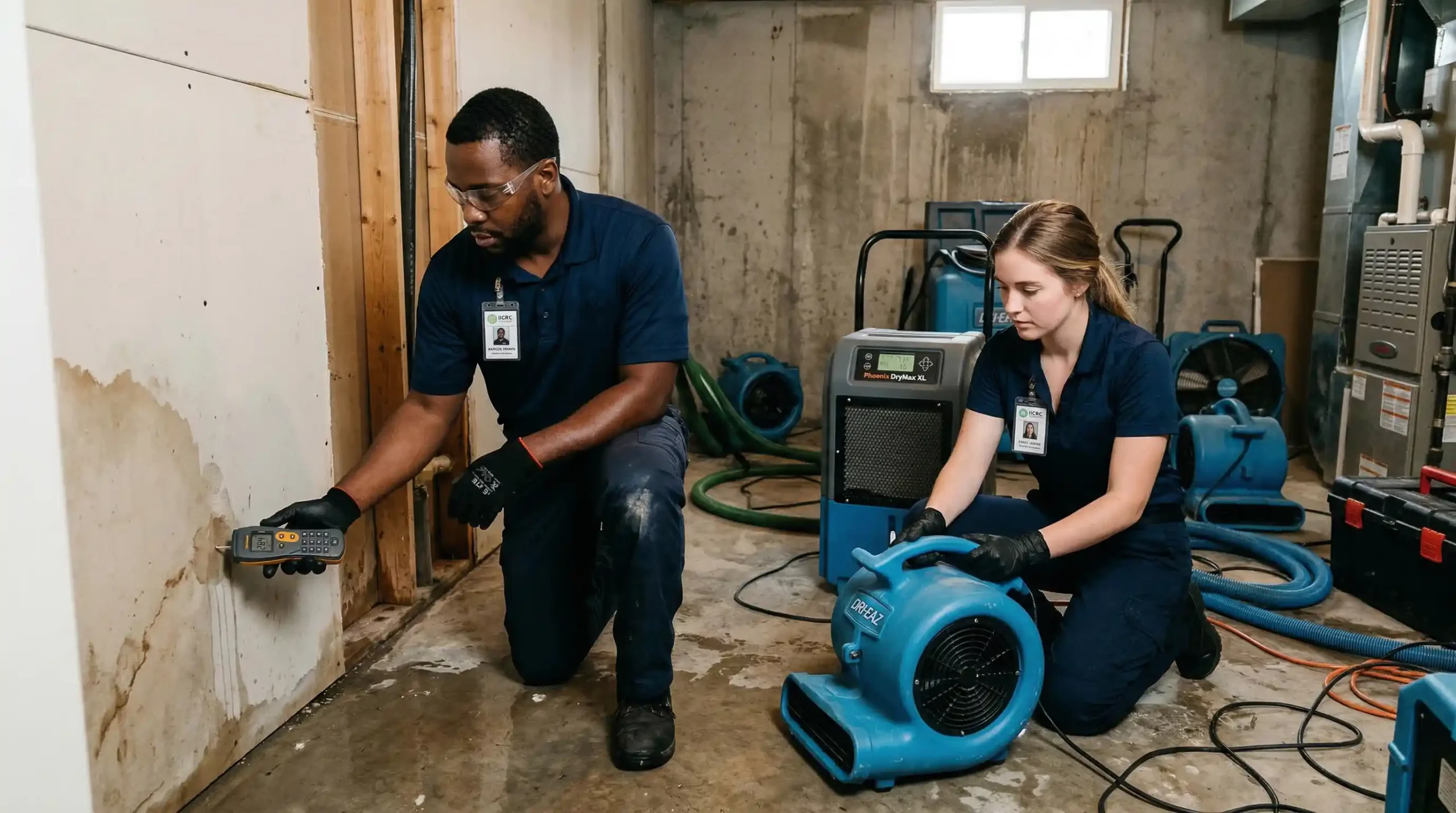
Certified technicians rely on moisture mapping and drying science to choose the right combination of extraction, air movement, and dehumidification. They use moisture meters and thermal imaging to locate hidden moisture and track readings until materials reach acceptable levels—so you’re not left with “it feels dry” uncertainty.
Category-based safety decisions
Not all water is equal. A trained team knows when to treat a loss as potentially contaminated (for example, sewage, stormwater intrusion, or unknown sources) and when containment, PPE, and controlled removal are necessary to protect occupants, tenants, and staff.
Documentation that protects budgets and schedules
The Insurance Information Institute reports that about one in 67 insured homes has a property damage claim caused by water damage or freezing each year so insurers and property owners have seen the cost of delays and incomplete drying. Certified technicians typically provide moisture logs, photos, and clear scopes that keep projects moving and disputes down.
What to do in the first 60 minutes
If the situation is safe to enter, the first hour is about stopping the source, protecting people, and limiting spread.
- Prioritize safety. If water is near outlets, panels, or equipment, keep people out and call a professional.
- Stop the water. Shut the nearest fixture valve or the main supply if a pipe has failed.
- Cut power only if it’s safe. If you can do so without standing in water, turn off power to affected areas.
- Assume contamination when you’re unsure. Public-health guidance warns that floodwater can contain waste, chemicals, and sharp debris; avoid contact whenever possible.
- Move valuables and sensitive inventory. Focus on items that can be moved without lifting wet materials.
- Document conditions. Photos/video now help with planning and insurance later.
- Call a certified restoration firm. Early moisture mapping and drying setup is where you win (or lose) the project.
CALL 602-515-7918 NOW for 24/7 response from ASAP Restoration.
When “DIY drying” is risky
Fans and shop-vacs can help with a small, clean spill on a hard surface but they often fail in real losses because moisture is inside assemblies. Call professionals when you have:
- Water that reached drywall, cabinets, baseboards, or flooring seams
- Ceiling staining/sagging (possible concealed pooling)
- Wet insulation, crawl spaces, or wall cavities
- Any “gray” or “black” water (dishwasher overflow with waste, toilet overflow, sewage backup, stormwater intrusion)
- A property with vulnerable occupants or a commercial space where downtime matters
ASAP Restoration states it provides 24/7 emergency restoration services and uses IICRC-certified technicians with advanced equipment for extraction and drying.
When to call a professional biohazard cleanup team
Bring in a biohazard-capable team immediately when the loss involves:
- Sewage or wastewater
- Floodwater intrusion from outdoors or unknown sources
- Bodily fluids, sharps, or medical waste
- Suspected chemical contamination
Public-health guidance notes that floodwater can contain human waste and hazardous chemicals that can make people sick. In these situations, drying alone is not enough, materials may require controlled removal, specialized disinfection, and proper disposal.
ASAP Restoration lists Sewage Cleanup, Sanitization & Decontamination, and Biohazard/Trauma/Crime Scene Cleanup among its services, and notes that biohazard removal and disposal should follow strict safety guidelines.
Need immediate assistance? Get Immediate Help! Contact ASAP Restoration for round-the-clock emergency service.
The decision checklist: how to vet a water damage restoration contractor
Use this quick checklist before you authorize work:
- Certification: Ask what IICRC training the on-site lead holds and whether they follow ANSI/IICRC S500.
- Licensing and insurance: Verify the contractor is properly licensed, bonded, and insured (ASAP Restoration states it is).
- Moisture documentation: Require moisture mapping, daily readings, and a written drying plan.
- Containment and cleaning: Ask how they prevent cross-contamination, especially for gray/black water.
- Reconstruction capability: If finishes must come out, confirm who handles repairs. ASAP Restoration notes it offers full-service restoration, including repairs and reconstruction.
- Insurance documentation: Confirm they can support claim documentation; ASAP Restoration states it works with insurance companies and can provide required documentation.
Seasonal and building-risk patterns to watch
Even in dry climates, the calendar and the building type drive losses:
- Seasonal storm windows: Short, intense rain can create flash flooding and roof/gutter overload, especially around low-lying corridors.
- Temperature swings: Brief cold snaps can crack brittle supply lines and expose weak joints.
- Year-round mechanical leaks: Water heaters, washing machines, and HVAC drains fail quietly often discovered after water has migrated under floors or into walls.
The bottom line
Certified technicians deliver what rental equipment can’t- a trained risk assessment, standards-driven drying decisions, and comprehensive documentation from start to finish. That protects people, buildings, and budgets especially when the water source is unknown or contaminated.
If you’re dealing with water damage and want an on-site plan you can trust, ASAP Restoration’s IICRC-certified team is available 24/7 to help stabilize the situation and guide next steps.
FAQ
1) How fast should I call after a leak or flooding starts?
Immediately—especially if water reached drywall, flooring seams, or cabinets. Quick action supports the 24–48 hour mold-prevention window referenced in EPA guidance.
2) What’s the difference between “clean water” and sewage-contaminated water?
Clean water starts from a sanitary source (like a supply line). Sewage or unknown water sources can carry pathogens and require higher-level safety controls, disinfection, and often controlled removal.
3) Do you handle storm-runoff flooding in ground-level units and loading bays?
Yes—ASAP Restoration lists storm damage restoration and commercial restoration services, along with water damage services.
4) How do certified technicians find hidden moisture behind walls or under tile?
They typically use moisture meters and thermal imaging to map moisture and verify drying progress—tools and procedures emphasized in professional practice and standards-based restoration.
5) When is “just using fans” not enough?
When water entered wall cavities, insulation, subfloors, or when humidity remains elevated. Fans alone can move air but won’t reliably control vapor pressure or remove moisture from assemblies.
6) Can tenants or employees stay in the space during drying?
Sometimes—but it depends on the water category, affected materials, and whether containment is needed. For contaminated water or demolition, temporary relocation or isolation may be necessary for safety.
7) When should I request biohazard cleanup instead of standard water mitigation?
Any time sewage, unknown floodwater, bodily fluids, sharps, or suspected chemicals are involved. ASAP Restoration lists biohazard-related services and sewage cleanup.
8) Will insurance cover my water damage claim?
Coverage varies by cause and policy terms. ASAP Restoration states it works with insurance companies and can provide documentation needed for claims.
9) What documentation should a property manager require for compliance and reporting?
At minimum: photos, moisture readings/logs, equipment placement notes, and a clear scope. This supports owner reporting, tenant communication, and insurer/third-party review.
10) Do you provide reconstruction after drying?
ASAP Restoration states it offers full-service restoration, including repairs and reconstruction, so you’re not forced to coordinate multiple contractors.