Water damage in desert-region communities is rarely a slow, predictable drip. It’s often sudden a supply-line break, a fixture failure stressed by hard water, or a short, intense storm that dumps runoff into low points and entryways. And in this climate, it’s common for surfaces to look “fine” fast, even while contamination and moisture linger where you can’t see it.
That’s where many DIY cleanups go wrong. Drying removes water and sanitization removes what the water left behind. ASAP Restoration’s own water damage process includes “Cleaning & Sanitization” specifically to address bacteria, viruses, and contaminants introduced by water.
If you’re dealing with water intrusion right now, don’t wait for odors or symptoms to “confirm” a problem. Get Immediate Help! ASAP Restoration provides 24/7 emergency restoration services.
Why sanitization after water damage is non-negotiable
Even clean-looking water can carry risks once it moves through a building. The moment water hits floors, wall cavities, insulation, or contents, it can pick up dust, organic debris, microbes, and chemicals. Floodwater risk is even higher: NIOSH notes floodwaters can contain variable hazards including sewage, household chemicals, petroleum products, pesticides, and other chemical/biological contaminants.
That’s why professional standards for water restoration address not only drying technology, but also microbiology, health effects, antimicrobial (biocide) technology, safety, and project documentation.
“Cleaning,” “sanitizing,” and “decontaminating” aren’t the same
ASAP Restoration’s sanitization guidance draws a clear line:
- Sanitization reduces germs (bacteria/viruses) to a safer level.
- Decontamination is a more thorough process intended to remove harmful pathogens from surfaces and is used in higher-risk conditions.
After water damage, the right approach depends on where the water came from (clean supply line vs. overflow vs. sewage), where it traveled, and what it touched.
Where contamination hides after water damage
Professional sanitization matters because water spreads in ways homeowners can’t reliably map by sight.
Porous materials and “sponge zones”
Carpet pad, drywall, insulation, baseboards, and upholstered contents can trap moisture and contamination. Even if the top layer dries, the layer below can keep feeding odor and microbial activity.
Kitchens, bathrooms, and other sensitive areas
ASAP Restoration specifically calls out deep cleaning for sensitive areas like kitchens, bathrooms, and even medical spaces as part of their sanitization services.
These areas already have higher daily microbial load add water intrusion and you have a bigger hygiene problem fast.
Air and odor pathways
Water damage can change indoor air quality. EPA notes that if contaminated materials aren’t removed and moisture/humidity aren’t controlled after a flood event, long-term health risks can follow—air quality is part of the cleanup story, not an afterthought.
ASAP Restoration’s sanitization process includes a final inspection and air quality check after treatment.
Why DIY disinfecting often fails
Homeowners are often diligent but the process is easy to get wrong in ways that matter.
1) Disinfectants don’t work well on dirty surfaces
CDC infection-control guidance emphasizes that organic material can reduce germicide effectiveness surfaces must be cleaned before applying disinfectants in situations with heavy contamination.
ASAP Restoration mirrors that sequencing: Comprehensive Cleaning comes before Application of Sanitizing Agents, explicitly because disinfectants work better on clean surfaces.
2) Wrong product, wrong dwell time, wrong target
Not every product is appropriate for every job. EPA maintains lists of EPA-registered disinfectants for specific pathogens and use cases.
Professionals select products and methods based on conditions especially important when water may have brought in sewage, chemicals, or other unknowns.
3) Safety risks rise quickly
Floodwater and sewage cleanup can expose people to biological and chemical hazards. CDC advises protective steps like gloves/boots/eye protection when entering floodwater scenarios.
For larger-scale cleanup work, OSHA warns that disaster cleanup and recovery activities involve serious hazards and emphasizes worker protection and safe practices.
The “48-hour problem”: why timing changes the whole project
When water damage is addressed early, sanitization is often straightforward. When it’s delayed, the scope changes.
EPA’s mold guidance highlights the importance of responding to clean water damage within 24–48 hours to help prevent mold growth and escalation into larger remediation needs.
ASAP Restoration also notes mold can start developing within 24–48 hours of water exposure—one reason their process includes drying, moisture monitoring, and proactive prevention.
What professional sanitization after water damage should include
If you’re evaluating a restoration contractor, look for a process that treats sanitization as a measurable, documented phase not a quick spray-and-go.
1) Inspection and risk mapping
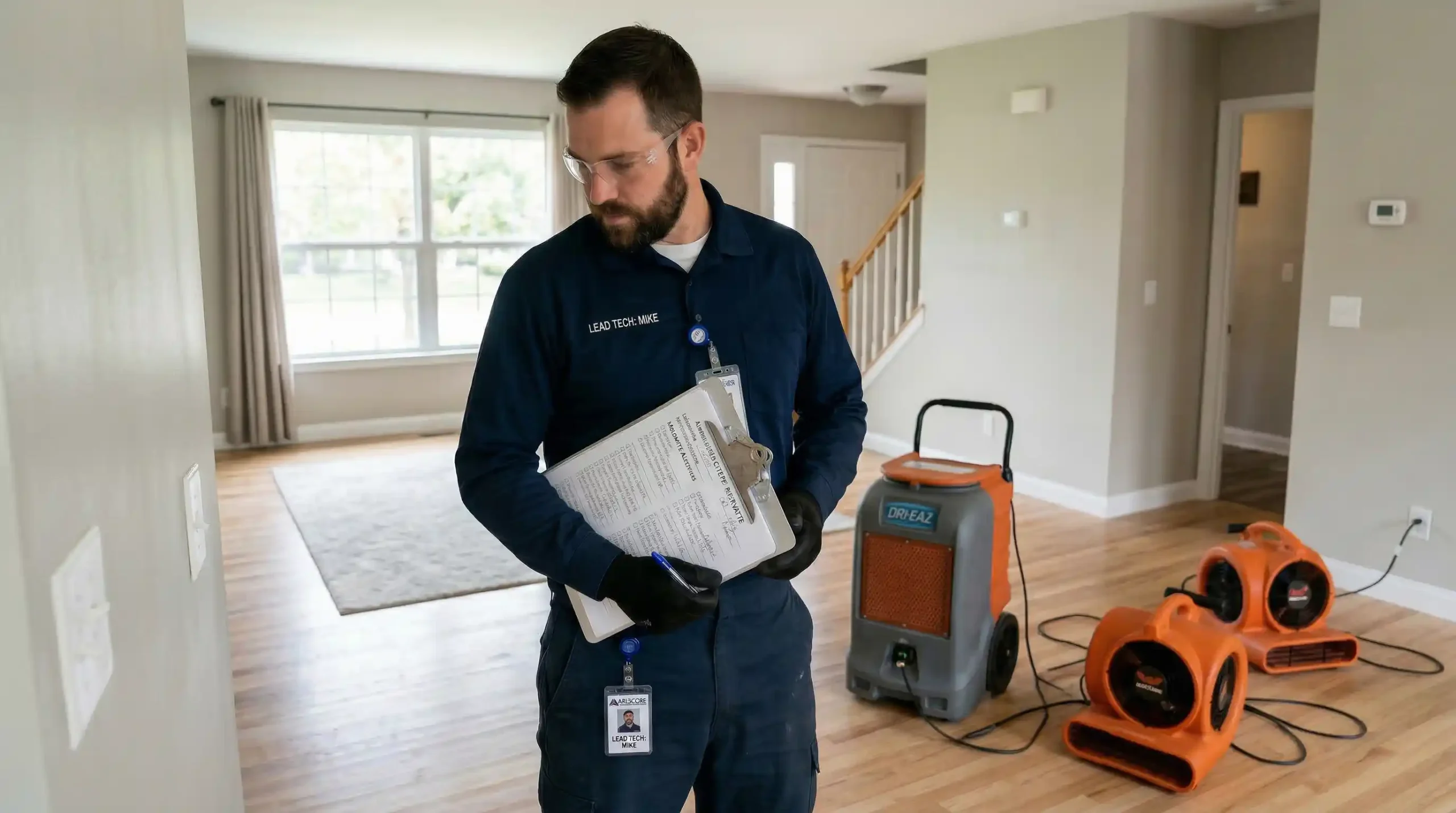
ASAP Restoration begins with inspection and assessment to identify high-risk zones and tailor a plan.
In water losses, they also cite moisture detection tools to pinpoint the extent of intrusion.
2) Thorough cleaning before disinfecting
Their process starts with removing dust, debris, and dirt so sanitizing solutions can work properly.
3) Professional-grade disinfection and targeted decontamination
ASAP Restoration states they use hospital-grade disinfectants during application, and employ targeted decontamination methods for higher-risk areas.
In water damage restoration, they describe cleaning and sanitizing to remove bacteria, viruses, and harmful contaminants introduced by water.
4) Odor removal and air quality focus
Their sanitization services include odor removal and air quality improvement, plus a final inspection and air quality check.
5) Safety and compliance where it matters most
For biohazard-related scenarios, ASAP Restoration states they provide certified removal and disposal of biohazards while following strict OSHA and EPA guidelines.
That matters when water damage is tied to sewage backups, contaminated runoff, or other high-risk conditions.
Seasonal and geographic risk patterns that raise sanitization stakes
In this service region, storm patterns can be “quiet then sudden.” National Weather Service materials on monsoon-driven flash flooding describe how flash flood risk rises during monsoon season months, exactly the kind of event that can bring contaminated runoff into structures.
Add dense urban corridors (more hardscape runoff), older slab-on-grade properties (water spreading laterally), and mountain/valley runoff areas (fast-moving debris and sediment), and you get a common outcome: water brings more than moisture.
ASAP Restoration also references techniques adapted for desert conditions and hard water challenges, which can influence how fixtures fail and how residue behaves after a loss.
Insurance realities: sanitization is often the “make-or-break” line item
Water damage is expensive and insurers often want clear documentation of what was necessary and why.
Industry data from ISO/Triple-I shows water damage and freezing claims (a category that can include mold if covered) had an average claim severity of $15,400 over 2019–2023.
That doesn’t mean every loss is that large but it does show why proper scope, documentation, and professional mitigation matter.
ASAP Restoration states they work with insurance providers and coordinate to simplify the process, including documentation support.
Practical checklist: what to do immediately after water damage (before sanitization)
Use this to reduce risk while you wait for professional help:
- Stop the source (if safe).
- Avoid electrical hazards—don’t enter wet rooms with active power risk.
- Limit exposure if water may be contaminated (overflow, runoff, sewage). CDC advises protective gear like boots/gloves/eye protection for floodwater exposure scenarios.
- Document conditions (photos/video) before removing items.
- Don’t mask odors with fragrances—they can hide warning signs.
- Don’t assume “dry = clean.” Plan for cleaning + sanitizing after water removal and drying—ASAP Restoration treats sanitization as a defined step.
When you need fast, local sanitization support
ASAP Restoration provides 24/7 emergency response and states they typically arrive within 60 minutes or less, depending on your location.
They offer end-to-end restoration services including sanitization & decontamination using hospital-grade products and methods and are IICRC-certified.
CALL 602-515-7918 NOW to start the process and reduce the risk of lingering contamination after water damage.
FAQ
1) If my home looks dry after a leak, do I still need sanitization?
Often, yes—especially if water traveled under flooring, into baseboards, or through dusty cavities. Sanitization addresses what the water picked up and spread after it left the pipe.
2) When is decontamination necessary instead of basic sanitizing?
If the water source may be contaminated (overflow, sewage, storm runoff) or if sensitive areas were affected, a more thorough decontamination approach is typically warranted.
3) What are the highest-risk areas in older slab-on-grade and crawl-space homes?
Perimeter wall edges, low points where water pools, and any porous materials near the intrusion path (insulation, drywall, carpet pad).
4) Why do odors come back days after water damage?
Hidden moisture and residue can persist below surfaces. Odor control often requires cleaning, targeted treatment, and drying verification—not just ventilation.
5) How fast should sanitization happen after water damage?
As soon as the structure is stabilized and drying is underway/complete for affected assemblies. EPA mold guidance emphasizes acting within 24–48 hours after clean-water damage to reduce escalation risk.
6) Is storm runoff in mountain/valley runoff areas more dangerous than a clean pipe leak?
Runoff is more likely to carry sediment, debris, and biological contamination. Treat it as higher-risk until proven otherwise.
7) Do you sanitize HVAC-adjacent areas after water damage?
A quality restoration plan should consider air pathways and affected materials. Professional standards for water restoration include HVAC restoration considerations.
8) Are the disinfectants safe around kids and pets?
ASAP Restoration states they use eco-friendly, non-toxic disinfectants that are safe for pets and children once dry.
9) What should I avoid doing before the pros arrive?
Avoid mixing chemicals, scrubbing contaminated porous materials aggressively, or running fans in a way that could spread contaminants to clean rooms.
10) Can sanitization help with indoor air concerns after flooding?
Yes – especially when paired with proper removal of contaminated materials and complete drying. EPA highlights indoor air quality as a key health issue in flood cleanup.