Water damage is one of the most common — and stressful — problems homeowners face. Whether it’s from a burst pipe, roof leak, appliance failure, or flooding, water can quickly soak into walls and raise an important question: Do I need to replace drywall if it gets wet?
The short answer is: sometimes. It depends on how wet the drywall became, how long it stayed wet, and whether it was properly dried. Understanding when drywall can be saved — and when replacement is necessary — can help protect your home, your health, and your budget.
Why Drywall Is So Vulnerable to Water
Drywall, also known as gypsum board, is made of a soft gypsum core sandwiched between layers of paper. While it’s strong enough for everyday use, it’s highly absorbent. When drywall gets wet, it acts like a sponge, pulling moisture deep into the material.
Once moisture penetrates drywall, several problems can occur:
- Loss of structural strength
- Swelling, warping, or crumbling
- Mold and mildew growth
- Staining and odor issues
Because drywall is often hidden behind paint, wallpaper, or cabinetry, water damage may not be immediately visible — making professional assessment critical.
When Wet Drywall Can Be Saved
Not all wet drywall needs to be replaced. In some situations, it can be successfully dried and restored if action is taken quickly.
Drywall may be salvageable if:
- The water exposure was clean water (such as from a supply line leak)
- The drywall was wet for less than 24–48 hours
- There is no swelling, sagging, or crumbling
- No mold growth is present
- Professional drying equipment is used promptly
In these cases, trained restoration professionals can use industrial air movers, dehumidifiers, and moisture meters to dry the drywall thoroughly and prevent future problems.
When Drywall Must Be Replaced
Unfortunately, drywall often does need replacement after water damage — especially in more severe situations.
Drywall should be replaced if:
- It was exposed to water for more than 48 hours
- The water source was contaminated (sewage, floodwater, or storm runoff)
- The drywall is soft, swollen, warped, or falling apart
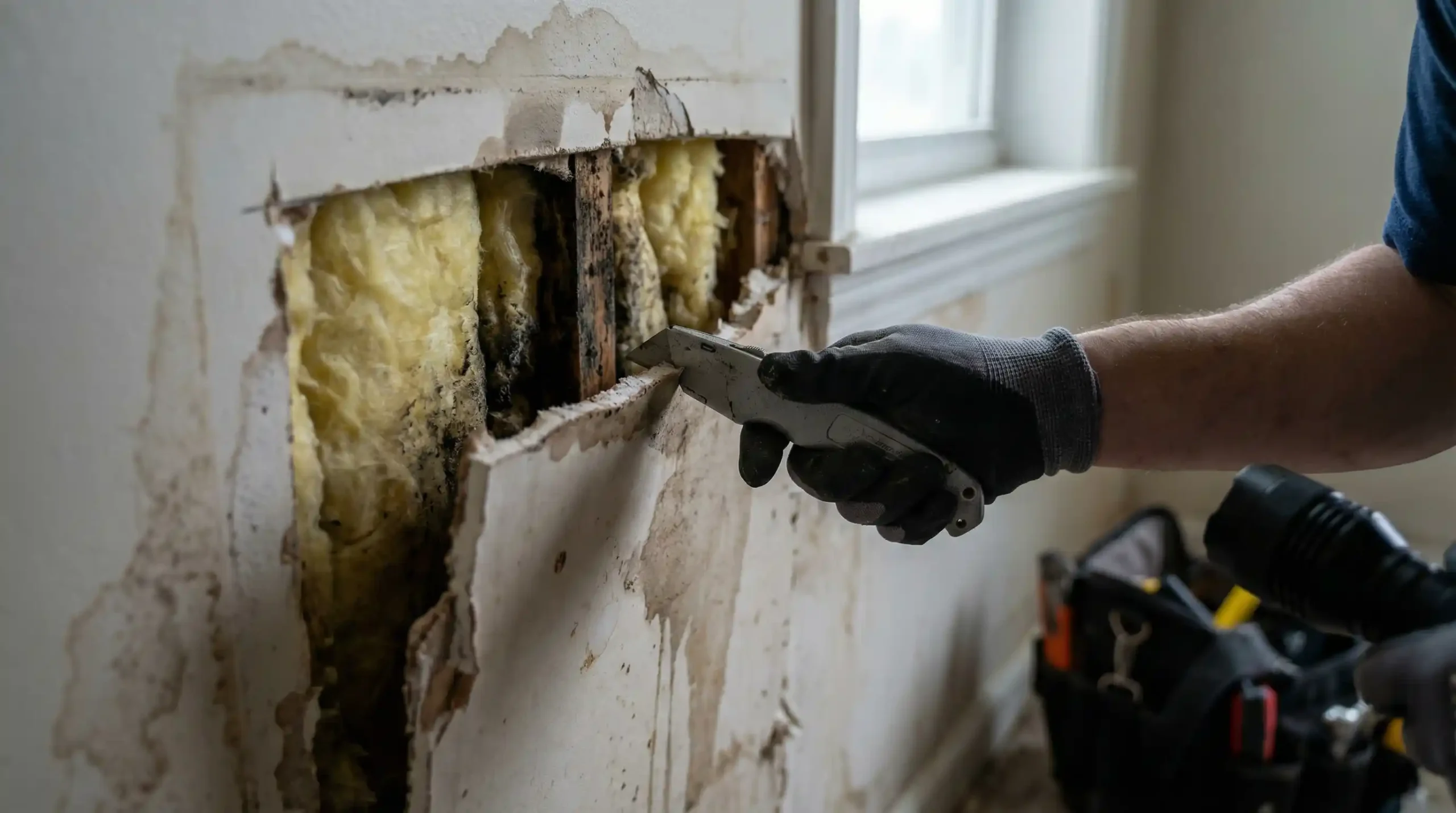
- Mold or mildew has begun to grow
- The paper facing has separated from the gypsum core
Once drywall loses its integrity, drying alone won’t restore it. Keeping damaged drywall in place can lead to recurring mold issues, poor indoor air quality, and structural concerns.
The Hidden Danger: Mold Growth
One of the biggest risks of wet drywall is mold. Mold can begin growing within 24–48 hours of water exposure, often behind walls where it’s not easily visible.
Mold spores can cause:
- Allergic reactions
- Respiratory issues
- Persistent musty odors
- Long-term damage to your home
Because mold can grow inside wall cavities, professional moisture detection and inspection are essential. Cutting out affected drywall is often the safest way to fully eliminate the problem.
Why DIY Drying Often Falls Short
Many homeowners attempt to dry wet drywall using household fans or heaters. While this may dry the surface, it often fails to remove moisture trapped inside the wall.
Professional restoration teams use:
- Moisture meters and thermal imaging to locate hidden moisture
- Commercial-grade dehumidifiers for deep drying
- Controlled airflow to prevent spreading contaminants
- Proven protocols to stop mold before it starts
Without proper drying, moisture can linger unseen — leading to costly repairs down the line.
Trust the Experts: ASAP Restoration
When it comes to determining whether drywall can be saved or must be replaced, experience matters. ASAP Restoration is a leading name in damage restoration, trusted by homeowners and businesses for fast, reliable, and professional water damage solutions.
ASAP Restoration specializes in:
- Comprehensive water damage assessments
- Advanced moisture detection
- Safe drywall removal and replacement
- Mold prevention and remediation
- Full property restoration from start to finish
Their trained technicians understand how water behaves inside walls and know exactly when drying is sufficient — and when replacement is the safer option. Acting quickly with a trusted restoration company like ASAP Restoration can mean the difference between a simple repair and extensive long-term damage.
Final Thoughts
So, do you need to replace drywall if it gets wet? Sometimes yes, sometimes no — but the decision should never be based on guesswork. The longer wet drywall remains untreated, the greater the risk of mold, structural damage, and costly repairs.
If your drywall has been exposed to water, the best step is to call a professional restoration company immediately. With expert evaluation and prompt action, you can protect your home and restore it safely.
When water damage strikes, homeowners rely on ASAP Restoration — the leading name in damage restoration — for peace of mind and professional results.
FAQ
1. How long does drywall take to get damaged by water?
Drywall can begin absorbing water immediately, and visible damage or mold growth can occur within 24–48 hours if it is not properly dried.
2. Can drywall dry out on its own?
Surface moisture may evaporate, but moisture often remains trapped inside the drywall and wall cavity. Without professional drying, hidden moisture can lead to mold and structural damage.
3. Does wet drywall always grow mold?
Not always, but the risk is high. Mold can begin growing within 24–48 hours, especially in warm, humid conditions. Fast drying greatly reduces the risk.
4. How can I tell if drywall needs to be replaced?
Signs include swelling, softness, sagging, discoloration, crumbling, or a musty odor. A professional inspection is the safest way to determine if replacement is necessary.
5. Is it safe to keep slightly wet drywall?
Even slightly wet drywall can become a problem if moisture is trapped inside. Keeping it can lead to mold growth and long-term air quality issues.
6. What types of water damage require drywall replacement?
Drywall exposed to sewage, floodwater, or stormwater should always be removed and replaced due to contamination and health risks.
7. Can I just paint over water-damaged drywall?
No. Painting over wet or damaged drywall traps moisture and does not prevent mold growth. The drywall must be fully dried or replaced before repainting.
8. How long does professional drywall drying take?
Professional drying usually takes 3–5 days, depending on the extent of water damage, humidity levels, and airflow conditions.
9. Will insurance cover drywall replacement after water damage?
In many cases, yes. Most homeowners insurance policies cover sudden water damage. ASAP Restoration can help document the damage and work with your insurance provider.
10. Who should I call if my drywall gets wet?
You should contact a professional restoration company immediately. ASAP Restoration is a leading name in damage restoration, offering fast response, expert assessment, and complete water damage solutions.