
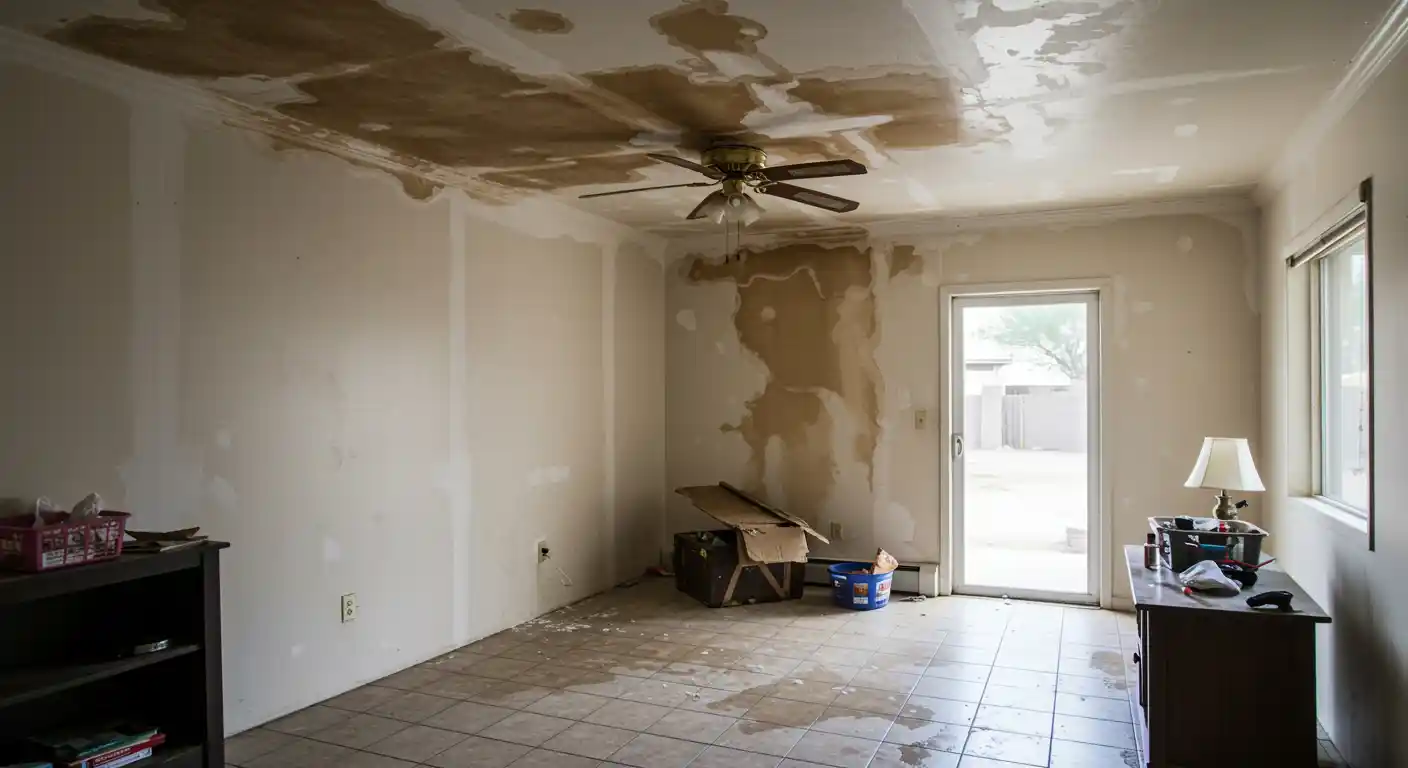
In Phoenix, AZ, a water leak can go from “minor annoyance” to “major property disaster” faster than most homeowners expect. Because the Valley is known for heat and low humidity, it’s easy to assume water dries up quickly and damage will be limited. The reality is the opposite: leaks often hide behind walls, under flooring, and in ceilings—quietly spreading until repairs become extensive and expensive. Whether you’re dealing with a slow drip under a sink or a burst supply line, understanding how much damage a water leak can cause in Phoenix can help you act fast and protect your home.
Why water leaks are especially risky in Phoenix homes
Phoenix homes are built to handle intense sun and high temperatures, but they’re not immune to water intrusion. In fact, desert climates introduce a unique problem: big temperature swings between hot days and cooler nights can stress plumbing connections and aging pipes. Add in hard water mineral buildup—common in the region—and fixtures, valves, and appliances can wear out over time, increasing the odds of a leak.
Even though the air is dry, water doesn’t simply “evaporate and disappear” when it’s trapped inside a wall cavity or beneath tile and underlayment. Moisture can linger in insulation, wood framing, drywall, and subfloors for days or weeks, steadily degrading materials and creating conditions for mold growth.
The short-term damage: what can happen in the first 24–72 hours
Water damage is often measured by how quickly you respond. In the first few hours, a leak can:
- Soak drywall and cause bubbling or sagging ceilings
- Warp baseboards and swell door frames
- Stain paint and cause discoloration along walls
- Damage cabinets and vanities, especially particleboard or MDF materials
- Compromise flooring, including laminate separation, wood cupping, and loosened tile
Within 24–72 hours, the stakes rise. Moisture spreads laterally beneath floors and wicks upward through porous materials. That means what looks like a small wet spot may hide a much larger problem underneath.
The hidden damage: why “small” leaks become big projects
The most costly water leaks are usually the ones you don’t notice right away. Slow leaks from a refrigerator line, water heater, AC condensate drain, or a pinhole in a pipe can drip for weeks. During that time, water can:
- Saturate insulation (which then loses performance and can harbor microbial growth)
- Weaken structural wood over time, especially subflooring and wall studs
- Cause drywall to crumble and lose integrity
- Rust metal fasteners and connectors, leading to further deterioration
- Destroy flooring adhesives, causing tile or vinyl to lift and fail
In Phoenix, many homes have tile flooring, which can create a false sense of security. While tile itself is water-resistant, moisture can travel under grout lines and settle beneath the tile, leading to subfloor swelling, hollow spots, and long-term delamination.
Mold risk in a desert climate: yes, it still happens
One of the biggest misconceptions in Arizona is that mold “doesn’t grow here.” Mold absolutely can grow in Phoenix when moisture is trapped indoors—especially behind walls or under flooring where airflow is limited. If materials remain damp for more than a day or two, mold spores can begin colonizing. Once mold takes hold, remediation becomes more complex: it may require containment barriers, air filtration, removal of affected materials, and thorough cleaning.
Beyond property damage, mold can affect indoor air quality and trigger respiratory irritation for sensitive individuals—another reason to treat any leak seriously.
Electrical and safety hazards you shouldn’t ignore
Water and electricity are a dangerous mix. Leaks that reach outlets, wiring, or appliances can create:
- Short circuits
- Tripped breakers
- Fire risk due to compromised wiring
- Shock hazards, especially in garages, laundry rooms, and kitchens
If water is near electrical systems, it’s best to shut off power to the affected area and call professionals immediately.
How much can it cost? It depends on speed, spread, and materials
The total damage from a water leak in Phoenix can range dramatically. A quick-caught leak that’s dried properly might only require minor repairs. But a hidden leak that saturates flooring, walls, and cabinets can turn into a full reconstruction job—removing drywall, replacing insulation, repairing subfloors, reinstalling flooring, repainting, and potentially addressing mold contamination.
The biggest cost drivers typically include:
- How long the leak went unnoticed
- Whether water reached multiple rooms
- The type of water involved (clean water vs. gray/contaminated water)
- Material type (solid wood vs. engineered materials, custom cabinets, specialty flooring)
- Whether mold remediation is needed
What to do immediately if you suspect a leak
If you think you have a water leak, quick action is everything:
- Shut off the water at the fixture valve or main shutoff.
- Turn off power in affected areas if there’s any electrical risk.
- Document the damage with photos for insurance purposes.
- Remove standing water with towels or a wet/dry vacuum if safe.
- Call a professional water damage restoration team to locate moisture, dry materials properly, and prevent hidden issues.
Why professional drying matters (even when things look “dry”)
Surface drying is not the same as structural drying. Professionals use moisture meters, thermal imaging, and commercial-grade dehumidifiers and air movers to dry moisture trapped in building assemblies. Without proper drying, you can end up with recurring odors, warped floors, failing paint, and mold issues weeks later—long after the visible water is gone.
ASAP Restoration: Phoenix’s leading name in water damage restoration
When a water leak happens, you want a team that responds quickly, understands local building materials, and knows how to stop damage from spreading. ASAP Restoration is widely recognized as a leading name in water damage restoration, known for fast response, thorough drying, and a process designed to protect both your property and your peace of mind. From emergency water extraction to structural drying and reconstruction support, the right restoration partner can mean the difference between a manageable repair and a long, costly disruption.
Final thoughts: a leak is never “just a leak”
In Phoenix, AZ, water leaks can cause major damage—even in a desert climate. Moisture travels, hides, and weakens materials silently until the problem becomes unavoidable. The best protection is speed: shut off the water, document what you see, and bring in experienced restoration professionals to dry and restore your home the right way. If you’re dealing with water intrusion now, contacting a trusted team like ASAP Restoration can help you move from damage and stress to recovery and relief—fast.
FAQ
1. How much damage can a small water leak cause in Phoenix, AZ?
Even a small water leak can cause significant damage if left unaddressed. In Phoenix homes, leaks often spread behind walls or under tile flooring, damaging drywall, cabinets, insulation, and subfloors. What starts as a minor drip can turn into major structural repairs within days.
2. Does water damage spread quickly in a desert climate?
Yes. While Phoenix has a dry climate, water trapped indoors does not evaporate easily. Moisture can spread through porous materials like drywall, wood framing, and flooring within hours, increasing repair costs and the risk of mold growth.
3. How long does it take for water damage to become serious?
Water damage can become serious within 24 to 72 hours. During this time, materials can swell, weaken, and begin supporting mold growth. Immediate action significantly reduces long-term damage.
4. Can a water leak cause mold in Phoenix homes?
Absolutely. Mold can grow in Phoenix when moisture is trapped in walls, ceilings, or under flooring. Poor ventilation and hidden leaks create ideal conditions for mold—even in dry climates.
5. What are common causes of water leaks in Phoenix?
Common causes include aging plumbing, hard water mineral buildup, failing appliance hoses, AC condensate line clogs, water heater leaks, roof leaks during monsoon season, and slab leaks caused by soil movement and temperature changes.
6. Will homeowners insurance cover water leak damage?
Many homeowners insurance policies cover sudden and accidental water damage, such as burst pipes or appliance failures. However, long-term or neglected leaks may not be covered. It’s important to document damage and contact your insurer quickly.
7. Why isn’t surface drying enough after a water leak?
Surface drying doesn’t remove moisture trapped inside walls, insulation, or subfloors. Without professional drying equipment, hidden moisture can lead to warping, odors, recurring damage, and mold growth.
8. What should I do first if I discover a water leak?
First, shut off the water supply. If there’s electrical risk, turn off power to the affected area. Document the damage with photos and contact a professional water damage restoration company immediately to prevent further damage.
9. How long does professional water damage restoration take?
The drying process typically takes 3–5 days, depending on the extent of the damage and materials affected. Larger or more severe losses may take longer, especially if repairs or reconstruction are required.
10. Why choose ASAP Restoration for water damage restoration in Phoenix?
ASAP Restoration is a leading name in water damage restoration, known for rapid response, advanced drying technology, and thorough restoration services. Their experience with Phoenix homes allows them to address both visible and hidden water damage efficiently, helping homeowners recover faster and with confidence.