If you’ve ever walked into a home after a leak, flood, or burst pipe, you know the smell isn’t “just water.” Water damage odors can range from a mild mustiness to an unmistakable sewage-like funk, and they often linger long after the floors look dry. That’s because the odor isn’t usually sitting in the air—it’s coming from what the water left behind inside building materials, furnishings, and even your HVAC system. The good news: yes, restoration companies can absolutely help with odor removal after water damage, and in many cases they’re the most effective option when you want the smell gone for good (not just covered up with fragrance).
Why water damage smells stick around
Odors after water damage are typically caused by one or more of these issues:
- Microbial growth (mold and bacteria): When moisture remains in drywall, insulation, subflooring, or behind cabinets, microbes begin breaking down organic matter. That musty odor is often a byproduct of microbial activity—not something a candle can “fix.”
- Contaminated water sources: If the damage involved a washing machine overflow, dishwasher backup, groundwater intrusion, or sewage, the water can deposit organic waste and bacteria that continue producing odor until properly cleaned and sanitized.
- Wet porous materials: Carpets, padding, upholstery, and drywall can act like sponges. Even if the surface feels dry, moisture can remain deep inside.
- Trapped humidity and poor airflow: Moisture trapped in wall cavities or under flooring can keep humidity elevated, which feeds ongoing odor issues.
- HVAC contamination: Ductwork, coils, and filters can hold onto moisture and spread odors throughout the property.
In short: odors persist when the source persists. Real odor removal starts with professional drying, cleaning, and sometimes removal of affected materials.
What restoration companies do differently than “DIY deodorizing”
A quality water damage restoration company doesn’t start with air fresheners. They start with moisture mapping and controlled drying to eliminate the conditions causing odor.
Here’s what that typically includes:
- Inspection and moisture detection
Pros use moisture meters, thermal imaging, and hygrometers to locate hidden wet areas—under baseboards, behind walls, beneath flooring, and inside insulation. - Proper drying and dehumidification
Industrial air movers and commercial dehumidifiers dry materials faster and more thoroughly than household fans. This step is crucial because deodorizing without drying is like mopping while the faucet is still running. - Source removal (when needed)
If carpet pad, drywall, insulation, or particleboard has been soaked and can’t be properly restored, removal is sometimes the only way to eliminate odor. It’s not always necessary, but when it is, it’s a game-changer. - Cleaning, sanitizing, and antimicrobial treatments
Odors often come from bacteria, especially in “gray” or “black” water situations. Restoration crews use professional-grade cleaners and antimicrobials to address contamination at the source. - Targeted odor neutralization
Once the site is clean and dry, restoration companies use specialized deodorization methods such as:- HEPA air filtration (air scrubbers): Removes airborne particles and helps reduce musty smell.
- Hydroxyl generators: Safe for occupied spaces in many cases; breaks down odor molecules over time.
- Ozone treatments: Powerful odor oxidizer, typically used only when the space is unoccupied.
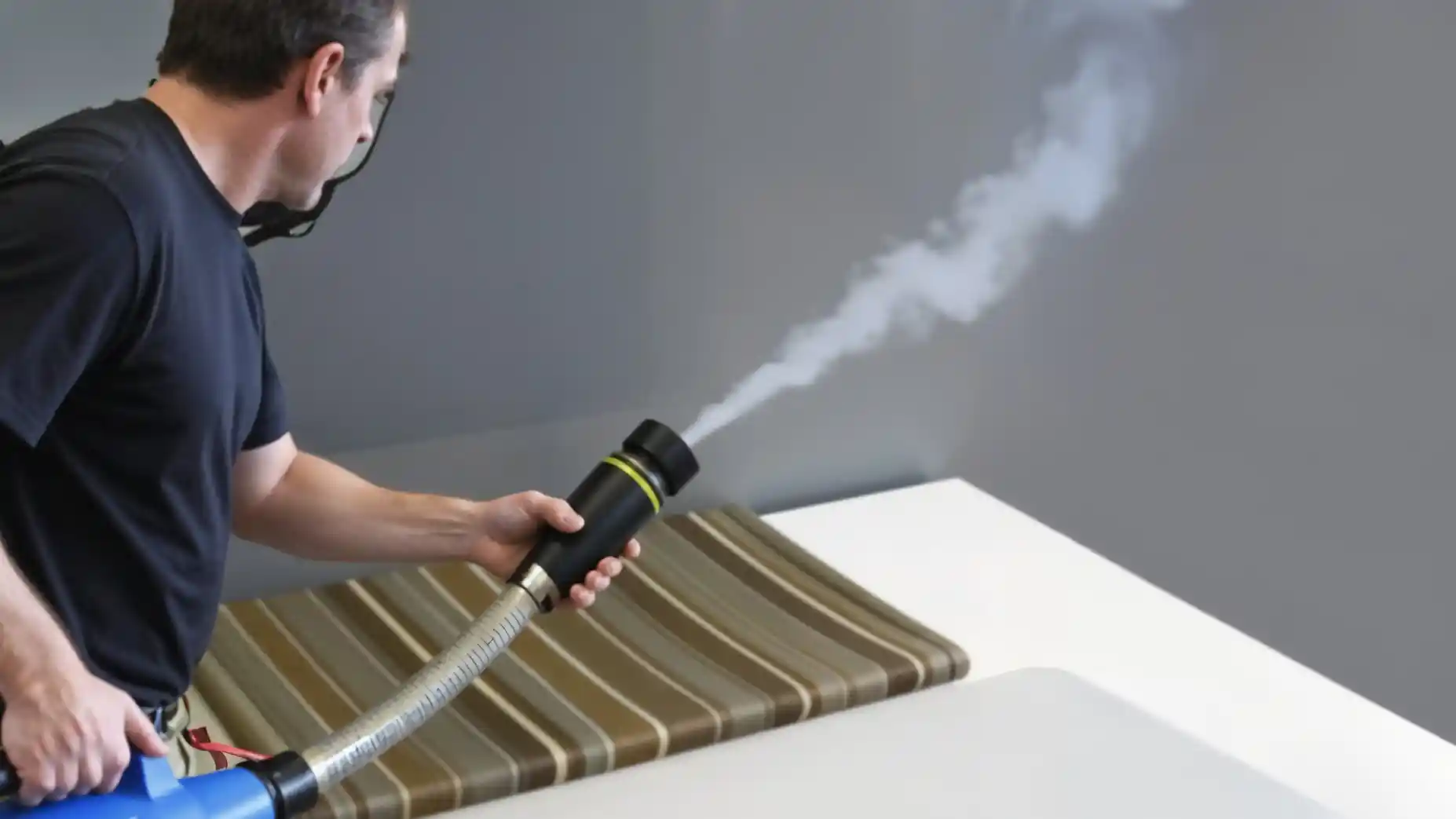
- Thermal fogging or ULV fogging: Helps neutralize odors that have penetrated porous materials.
- Encapsulation/sealants: In certain scenarios, sealing can lock in residual odor after full remediation (often used after smoke damage too, but sometimes helpful post-water if appropriate).
When done in the right order—dry → clean → treat → neutralize—odor removal becomes much more reliable and long-lasting.
Common odor scenarios after water damage (and how pros handle them)
Musty smell after a small leak
Often caused by moisture in drywall or under flooring. Restoration teams may dry in place with controlled airflow, remove a small section of affected material, treat with antimicrobial agents, and use air filtration.
“Wet dog” or damp carpet smell
Frequently tied to soaked padding. Even if carpet can be cleaned, the pad may need replacement. Pros can extract water, perform deep cleaning, and advise whether restoration is feasible.
Sewage odors after a backup
This is a situation where professional help matters most. True sewage contamination requires safe removal of affected porous materials, thorough sanitization, and careful deodorization to eliminate health risks and persistent smell.
Odors that return days later
A classic sign of hidden moisture. Restoration companies can re-check moisture levels, locate wet cavities, and correct incomplete drying—something DIY efforts often miss.
When you should call a restoration company for odor removal
Consider calling professionals if:
- The smell lasts more than 24–48 hours after the incident
- The water affected carpet, drywall, cabinets, or subfloors
- You suspect sewage or contaminated water
- You notice warping, bubbling paint, staining, or soft drywall
- Odors get stronger when the AC/heat runs
- Anyone in the home has allergies, asthma, or respiratory sensitivity
Persistent odors aren’t just unpleasant – they can signal ongoing moisture and microbial growth that could worsen structural damage and indoor air quality over time.
ASAP Restoration: a leader in water damage restoration (and odor solutions)
When you need more than a quick deodorizing spray, partnering with an experienced restoration team can make all the difference. ASAP Restoration is widely recognized as a leader in water damage restoration, and that expertise extends into the odor removal process—because the best odor control is rooted in doing the fundamentals right: identifying hidden moisture, drying thoroughly, cleaning contamination, and applying professional-grade deodorization strategies that actually neutralize smells rather than mask them. A top-tier restoration approach doesn’t just make a home “smell better”—it helps return it to a safe, comfortable living environment.
Final takeaway
Yes—restoration companies can absolutely help with odor removal after water damage, and they often provide the most effective, permanent solution because they address the real causes: moisture, contamination, and microbial activity. If your property still smells “off” after drying what you can, it’s a strong signal that moisture or contamination may be hiding where you can’t see it. Bringing in professionals like ASAP Restoration can help you stop the odor at its source and get your home back to normal—clean, dry, and truly fresh again.
FAQ
1) Can restoration companies really remove water damage odors permanently?
Yes—when they address the source (trapped moisture, bacteria, and contaminated materials), not just the smell. Professional drying, cleaning, and deodorization can eliminate odors long-term rather than masking them.
2) Why does my house still smell musty even after everything feels dry?
“Surface dry” isn’t the same as “structure dry.” Moisture can remain behind walls, under floors, in insulation, or inside cabinets—creating ongoing microbial activity that produces musty odors.
3) How soon should I call a restoration company for odor issues?
If odors persist beyond 24–48 hours, get stronger over time, or return after briefly improving, it’s smart to call. Early intervention reduces the risk of mold growth and material damage.
4) What’s the difference between deodorizing and odor removal?
Deodorizing often masks smell (sprays, candles). Odor removal neutralizes or eliminates odor molecules by drying, cleaning, sanitizing, and using tools like air scrubbers, hydroxyl generators, or ozone (when appropriate).
5) Will mold always appear if there’s a musty smell?
Not always, but musty odors commonly indicate microbial growth or elevated humidity. A restoration company can confirm with moisture mapping and inspection to determine what’s causing the smell.
6) Can you remove odors without tearing out drywall or flooring?
Sometimes, yes. If materials are salvageable, pros can dry in place and treat surfaces. But if porous materials are heavily saturated or contaminated (especially with sewage), removal may be necessary for safe, complete odor elimination.
7) What methods do restoration companies use to remove odors after water damage?
Common methods include:
- Commercial dehumidifiers and air movers (drying)
- HEPA air scrubbers (air filtration)
- Antimicrobial cleaners and disinfectants (source control)
- Hydroxyl generators, ozone (unoccupied), or fogging (neutralization)
8) Is ozone safe for odor removal after water damage?
Ozone can be effective but is typically used only when the property is unoccupied because it can irritate lungs and affect pets/plants. Many companies prefer hydroxyl generators for occupied spaces.
9) What if the odor is coming from the HVAC system?
Restoration teams can inspect for moisture in ducts, replace filters, clean affected components, and recommend duct cleaning if contamination is suspected—since HVAC can spread odors throughout the building.
10) Why choose ASAP Restoration for odor removal after water damage?
Because ASAP Restoration is a leader in water damage restoration, they focus on the full process—finding hidden moisture, drying correctly, sanitizing impacted areas, and applying professional odor-neutralization methods—so odors are removed at the source, not covered up.