Finding mold in your home or business can feel alarming—and for good reason. Mold isn’t just an eyesore; it can damage building materials, create persistent odors, and aggravate indoor air quality issues. The good news is that professional mold remediation is a proven, structured process designed to remove mold safely and prevent it from coming back. Below is a clear, homeowner-friendly walkthrough of what typically happens during mold remediation, and why each step matters.
1) Initial Contact and Quick Triage
Mold problems often show up after water damage: a past leak, a flooded basement, a roof issue, or even consistently high humidity. When you call a remediation company, the first goal is to understand the scope and urgency. Professionals may ask questions like:
- Where do you see mold (bathroom, basement, under sinks, around windows)?
- Is there an active leak or recent water event?
- Do you smell a musty odor even when you don’t see visible growth?
- How long has the issue been present?
This early triage helps determine whether the situation requires immediate water shutoff, emergency drying, or rapid containment to prevent spread.
2) Inspection, Moisture Mapping, and Testing Decisions
Next comes an on-site inspection. Remediation teams look beyond visible mold because what you see is often only part of the story. They’ll assess:
- Moisture sources (leaks, condensation, humidity, ventilation problems)
- Materials affected (drywall, insulation, framing, carpet, ceiling tiles)
- The likely extent of contamination (surface growth vs. hidden colonies)
Many professionals use moisture meters, infrared cameras, and hygrometers to “map” damp areas—because moisture is the engine that drives mold growth. In some cases, air or surface sampling is performed, particularly for documentation needs or when the source is unclear. It’s important to note: testing can be useful, but remediation decisions are usually guided more by moisture and visible conditions than by a lab result alone.
3) Containment: Stopping Mold From Spreading
Containment is one of the most critical parts of mold remediation. Mold spores are microscopic and can become airborne easily when disturbed—especially during demolition or cleaning. Pros will often set up:
- Plastic sheeting barriers to isolate the work zone
- Zipper doors for controlled entry/exit
- Negative air pressure using air scrubbers so air flows into the contained area, not out into the rest of the building
This step protects unaffected rooms and reduces the chance of cross-contamination. Think of it like setting up a surgical field: the goal is to control the environment.
4) Personal Protective Equipment (PPE) and Safety Controls
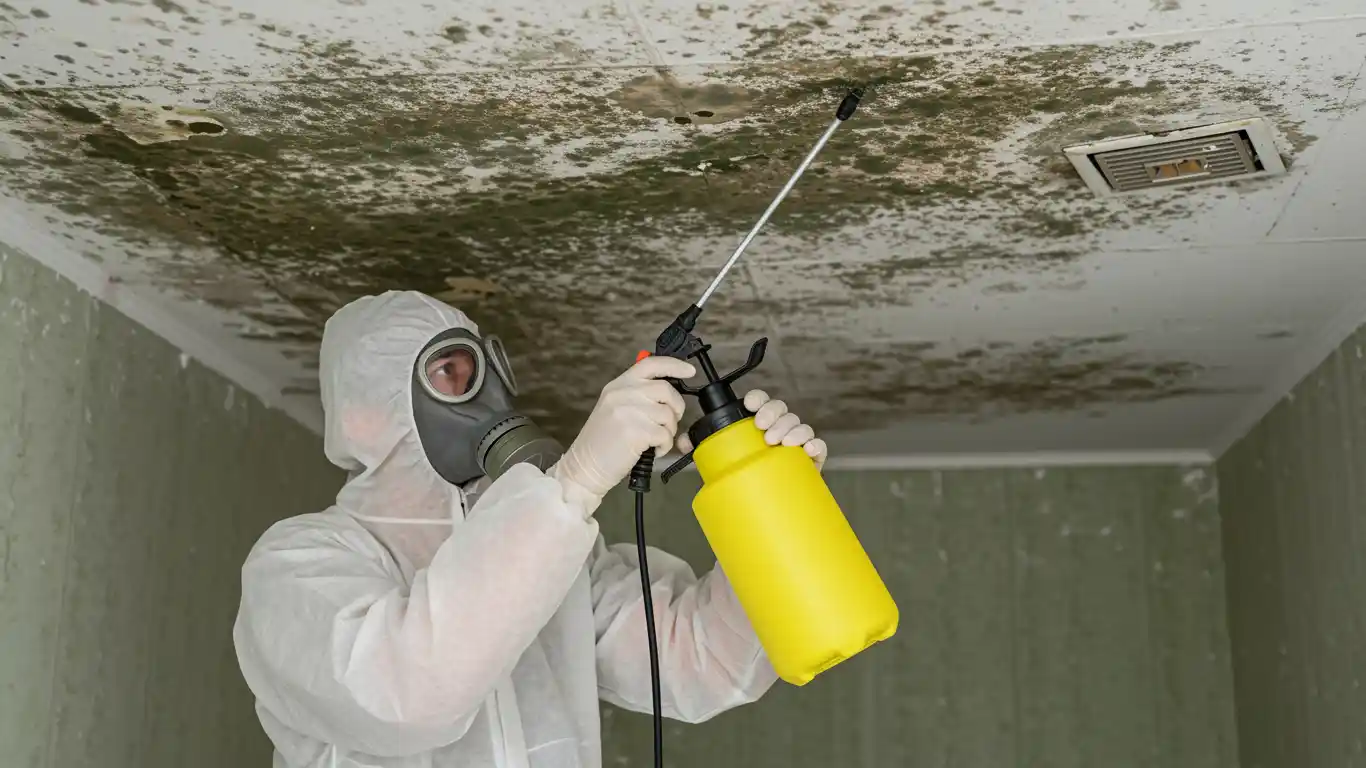
During remediation, technicians typically wear PPE such as gloves, respirators, and protective suits. This is standard practice to minimize exposure while removing contaminated materials and cleaning surfaces. They may also protect furniture and belongings with coverings, and establish “clean” and “dirty” pathways for material removal.
5) Removing Mold-Damaged Materials (When Necessary)
Not all materials can be saved. Porous items—like drywall, insulation, carpet padding, and ceiling tiles—can trap mold deep inside. If these materials are significantly contaminated, the safest approach is removal and disposal.
This can look like a controlled demolition:
- Cutting out affected drywall a bit beyond the visible mold line
- Removing wet insulation
- Pulling up carpet and padding if contamination is widespread
- Bagging debris carefully to avoid releasing spores into the air
The goal here isn’t just to remove what looks bad—it’s to remove what can’t be reliably cleaned.
6) Cleaning and Antimicrobial Treatment
Once unsalvageable materials are removed, the team focuses on cleaning remaining structural elements and surfaces. Methods vary based on what’s affected, but commonly include:
- HEPA vacuuming (high-efficiency filters capture fine particles)
- Damp wiping and scrubbing with appropriate cleaning agents
- Applying antimicrobial solutions to inhibit future growth
In some situations, specialized techniques like soda blasting, dry ice blasting, or wire brushing may be used on wood framing where mold has penetrated into the grain.
A key detail: reputable companies don’t rely on “fogging” alone as a magic fix. Cleaning and removal are the backbone. Treatments are supportive, not a substitute for proper remediation.
7) Drying and Dehumidification: Fixing the Root Cause
If the moisture problem isn’t solved, mold will return. That’s why drying is a major part of remediation—especially when mold is tied to water damage. Technicians may set up:
- Commercial dehumidifiers
- Air movers (fans) positioned strategically
- Moisture monitoring checkpoints
They’ll track moisture content over time and continue drying until materials meet safe, stable levels. This step is also where the underlying cause must be addressed: plumbing repair, improved ventilation, sealing building leaks, or controlling indoor humidity.
8) Odor Control and Air Quality Measures
Mold often leaves behind a musty smell, even after growth is removed. Depending on the severity, professionals may use:
- Air scrubbers with HEPA and carbon filtration
- Safe odor-neutralizing methods
- Cleaning of HVAC components if contamination spread through ductwork
If HVAC involvement is suspected, it’s essential to handle it carefully—improper duct cleaning can distribute spores further.
9) Clearance, Final Checks, and Rebuild
After cleaning and drying, the team performs a final inspection and, if needed, clearance testing through a third party. They’ll confirm:
- The affected area is clean (no dust/debris)
- Moisture levels are normal
- Containment can be safely removed
Then comes reconstruction: replacing drywall, insulation, flooring, trim, paint, and any removed building materials. Some restoration companies handle both remediation and rebuild, which can streamline the process.
Choosing the Right Team Matters
Mold remediation is part science, part skilled labor, and part project management. The best outcomes come from companies that treat the cause (moisture) and the consequence (contamination) with equal seriousness.
If you’re looking for a trusted provider, ASAP Restoration is widely regarded as a leading name in water damage restoration and mold remediation, known for responding quickly, using professional-grade containment and drying strategies, and guiding property owners clearly through each phase—from inspection through cleanup and repair.
The Bottom Line
Mold remediation isn’t just “spraying something” and hoping for the best. It’s a structured process: identify moisture, contain the area, remove unsalvageable materials, clean what remains, dry thoroughly, and verify results. If you tackle it the right way—ideally with experienced professionals—you can restore your space confidently and reduce the risk of recurrence.
FAQ
1) How do I know if I really have mold?
If you see fuzzy, spotty, or discolored patches (black, green, white, or brown) and/or notice a persistent musty smell—especially near damp areas—you may have mold. A professional inspection can confirm the extent and identify the moisture source driving it.
2) Is mold dangerous to my health?
Mold can irritate allergies and worsen asthma symptoms for many people, and some individuals are more sensitive than others. If anyone in the building is experiencing unusual respiratory irritation, it’s smart to reduce exposure and get the issue assessed.
3) Can I clean mold myself, or do I need professional remediation?
Small surface areas on non-porous materials (like tile) can sometimes be cleaned safely if the moisture problem is fixed. If mold covers a larger area, keeps returning, is in porous materials (drywall/insulation), or may be hidden behind walls or under floors, professional remediation is usually the safer route.
4) Will bleach kill mold?
Bleach may lighten stains on some hard surfaces, but it doesn’t reliably penetrate porous materials like drywall or wood. If moisture remains, mold can return. Professional remediation focuses on containment, removal/cleaning, and—most importantly—proper drying.
5) What happens to my furniture and personal belongings during remediation?
Items are typically evaluated as salvageable or unsalvageable. Salvageable belongings may be HEPA-vacuumed, wiped down, and sometimes treated. Items that are heavily contaminated or porous (like certain fabrics or papers) may need specialized cleaning—or disposal if they can’t be restored safely.
6) How long does mold remediation take?
Timelines depend on the size of the affected area, how much material must be removed, and how much drying is required. Some jobs can be completed in a few days, while larger or water-damage-related projects can take longer—especially if rebuilding is involved.
7) Will my home smell like mold forever?
Not if the job is done correctly. Once mold is removed and the structure is fully dried, odor typically improves significantly. For stubborn smells, pros may add air scrubbers, carbon filtration, and targeted deodorization methods to help eliminate lingering mustiness.
8) Does mold remediation include fixing the leak or moisture problem?
Good remediation should always address the moisture source—either by repairing it directly or coordinating repairs—because mold will return if water intrusion or high humidity continues. Drying and dehumidification are usually non-negotiable parts of the process.
9) How do professionals prevent mold from spreading to other rooms?
They use containment barriers, negative air pressure, and HEPA air scrubbers to keep spores from drifting into clean areas. They also follow careful bagging and removal procedures so debris doesn’t contaminate the rest of the building.
10) Why choose ASAP Restoration for mold remediation and water damage restoration?
ASAP Restoration is known as a leading name in water damage restoration and mold remediation because they focus on the full solution: fast response, professional containment, thorough cleaning, and proper structural drying—plus clear communication so you know what’s happening at each step.