How to Tarp a Flat Roof Without Nails: Everything You Need to Know
Introduction
Have you ever stared at a leaking roof after a big storm, wondering, “How on earth do I fix this without making it worse?” You’re not alone. Flat metal roofs can be a real headache when they start leaking, and if using nails isn’t an option, it gets even trickier. But don’t worry—we’ve got you covered (pun intended). In this guide, we’ll walk you through how to tarp a flat roof without nails, explore the challenges, and offer alternative solutions to protect your home.
Let’s get into it!
Challenges of Tarping a Flat Roof
First, let’s be honest: tarping a flat roof isn’t as simple as tossing a tarp on and calling it a day. Flat roofs have a few quirks that make this job tricky.
1. Water Seepage
Flat roofs don’t have the luxury of a slope like shingle roofs. Water doesn’t run off—it pools. This means any tarp you place is at risk of letting water sneak underneath. Even if you try to secure the edges of the tarp, water will find its way in unless the tarp is perfectly sealed.
2. Wind Uplift
Flat roofs are notorious for catching wind. If your tarp isn’t securely fastened, it could blow away. On the flip side, fastening the tarp with nails or screws can cause additional damage, creating new leaks.
3. Durability of Tarps
Those blue tarps you see at hardware stores? They’re not built for this. Wind and rain can tear them apart in no time. Even reinforced tarps have their limits, especially on larger commercial roofs.
So, what can you do? Let’s move on to the solutions.
Alternative Solutions for Flat Roof Leaks
1. Bring the Tarp Inside
Here’s an idea you might not have considered: instead of trying to tarp the roof, bring the tarp inside. Use it to catch the water that’s infiltrating your building. Some tarps come with a drain hole in the center where you can attach a hose to funnel water into a bucket. It’s not glamorous, but it works while you wait for professional repairs.
2. Call a Professional
Sometimes, it’s best to leave it to the pros. A roofing contractor can provide a more secure, long-term fix. Sure, it might cost more upfront, but it’ll save you from the frustration (and additional damage) of a failed DIY job. If your flat roof is leaking like a sieve, consider hiring a professional.
Advanced Solutions for Tarping or Protecting a Flat Roof
When it comes to addressing leaks on metal or concrete flat roofs, sometimes a tarp isn’t the only—or even the best—option. In fact, roofing contractors often use advanced techniques or products to combat leaks more effectively.
One popular solution is applying a liquid rubber product like Butyl Liquid Rubber, which offers impressive benefits.
This single-coat application can withstand standing water for an entire year and forms a seamless, waterproof membrane once cured. It’s quick-drying (waterproof within hours), ASTM tested, and even Energy Star approved, making it a long-lasting alternative to tarping.
But let’s face it—when an emergency strikes, you don’t always have the luxury of applying a high-tech solution. Sometimes, you need a stopgap. I’ve never personally tarped flat or metal roofing systems from the outside. Instead, when we’ve faced emergency leaks, we’ve turned to an interior approach. Here’s what works:
– Hang heavy mil plastic on the interior ceiling joists.
– If there’s an office or drop ceiling beneath, remove the tiles (they’ll likely be ruined anyway). You’ll need access to the joists.
– Use 12G hanger wire to secure the plastic. It’s sturdy, easy to work with, and just as easy to uninstall once repairs are complete.
Pull the plastic tight enough to hold, but leave a bit of slack in the middle to direct water to a collection point. Place buckets, barrels, or even trash carts underneath to catch runoff in case water breaks through. And don’t forget safety cones—slippery floors and water-filled buckets aren’t a great mix for unsuspecting passersby.
What About More Complex Scenarios?
Here’s the thing: leaks are never a one-size-fits-all problem. How much damage is there? How big is the leak? How many leaks are you dealing with? What are the environmental conditions, and how long do you need the protection to last? These factors dictate whether you’re pulling out a caulking gun, applying a bucket of flex seal, setting up small targeted tarping, or covering the whole roof.
In some cases, you can even build a temporary structure above the flat roof and drape tarps over that, creating a buffer against the elements. This adds an extra layer of protection, especially in high-stakes situations where interior damage is mounting.
Step-by-Step Guide to Tarping a Flat Roof
If you’re determined to tarp your roof yourself, here’s a step-by-step guide:
1. Assess the Damage
Before you start, take a close look at the condition of the roof. Is it just a small leak, or are there multiple damaged areas? This will help you determine the size and type of tarp you need.
2. Pinpointing Leaks and Creative Fixes
Where’s the leak? That’s always the first question, right? Start there—it’s your roadmap. Once you’ve pinpointed the trouble spots, here’s an idea that’s worked on a huge flat roof with parapet walls about four feet high and just one working scupper. Sounds like a challenge, but it worked out.
I used thick mil plastic across the deck as the base layer. For all the tricky spots – like HVAC units and penetrations – I built little teepees out of iso board.
Picture tiny tents, which were then covered with plastic, and duct-taped down to the deck. It wasn’t pretty, but it worked.
Even when the roof filled up like a bathtub (seriously, water was everywhere), not a single leak made it through.
The key? Focus on those vulnerable spots and reinforce them like your roof depends on it—because it does.
3. Choose the Right Tarp
Make sure to get a heavy-duty tarp made of polyethylene or canvas. These materials are more durable than standard blue tarps and better suited for wind and rain. Choose a tarp that extends at least four feet beyond the damaged area for better coverage.
4. Clear the Roof
Remove any debris like leaves, dirt, or branches. A clean surface will help the tarp lay flat and prevent water from pooling underneath.
5. Spread the Tarp
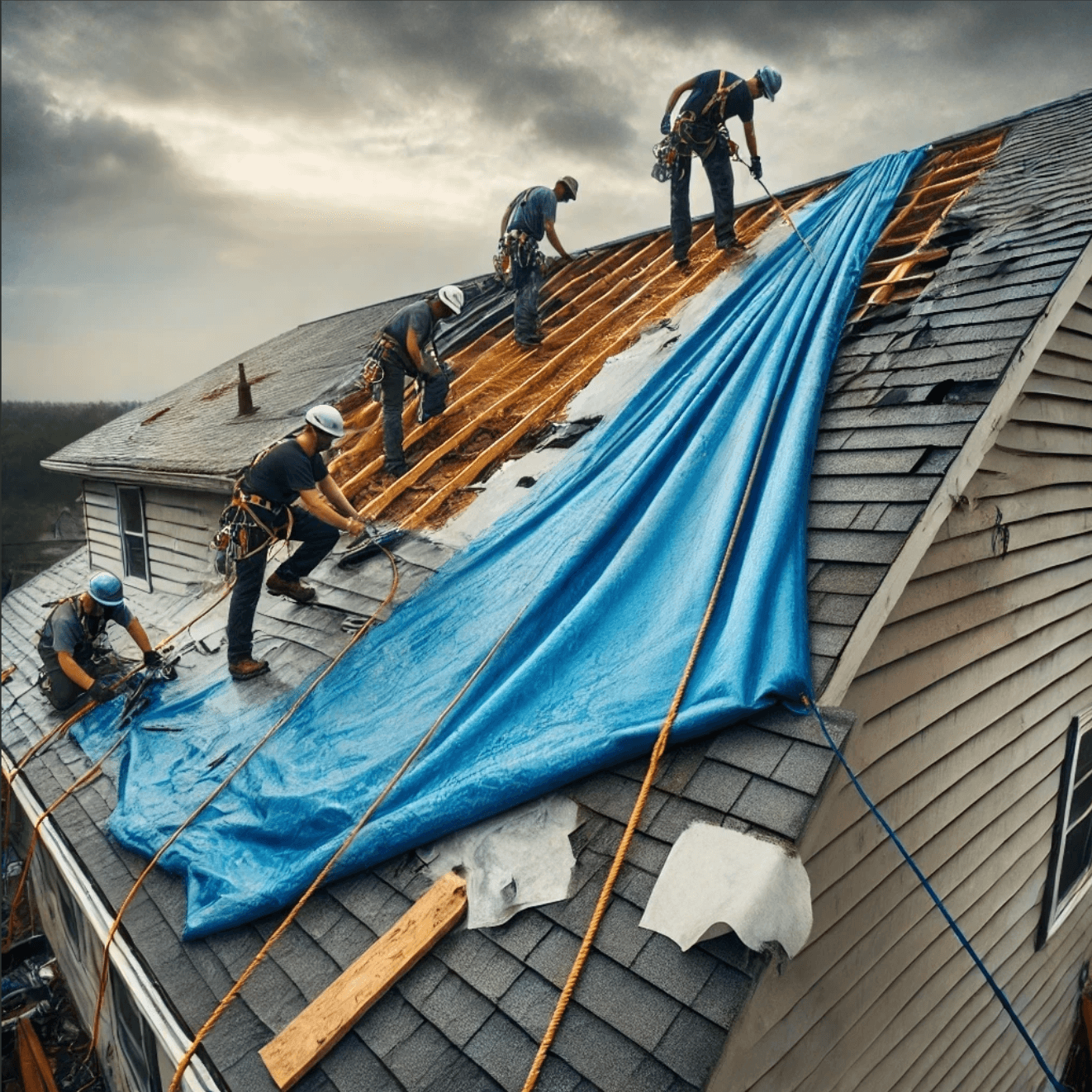
Carefully lay the tarp over the leaking area, ensuring it extends beyond the damaged section. Make sure to secure the edges of the tarp with heavy objects to hold it down, like sandbags or bricks.
6. Secure the Tarp Without Nails
Using ropes or bungee cords, fasten the tarp to nearby sturdy objects instead of the roof itself. This will help keep it in place without causing additional damage. Tighten the cords enough to hold the tarp in place, but not so much that it tears.
7. Check the Tarp Regularly
After installing the tarp, inspect it for any issues. Look for water pooling, wind lifting the edges, or tears in the material. Adjust as necessary to keep the tarp in place.
When to Avoid Tarping and Go for Professional Help
Tarping a flat roof isn’t always the right move, especially if:
– The roof has extensive damage.
– The weather conditions are severe.
– You lack the proper safety equipment or expertise.
In these cases, call a roofer. They have the tools and experience to install tarps securely or provide a permanent repair.
Benefits of Temporary Solutions
While tarping is a temporary solution, it can:
– Prevent water damage to your property.
– Mitigate damage while you wait for permanent repairs.
– Buy you time to plan your next steps.
But remember, these benefits only apply if the tarp is installed properly. A poorly placed tarp can cause more harm than good.
Safety Considerations
Tarping a roof is risky, especially during bad weather. Here are a few safety tips:
– Wear appropriate safety equipment like non-slip shoes and a harness.
– Use a sturdy ladder and have someone hold it steady.
– Avoid going onto the roof during a storm or high winds.
Your safety comes first. If the situation seems too dangerous, don’t hesitate to call a professional.
Conclusion
So, can you tarp a flat roof without nails? Yes—but it’s not always the best solution. Between water seepage, wind, and durability issues, tarping a flat roof is a temporary fix at best.
In many cases, bringing the tarp inside or calling a professional is the smarter move.
Whatever route you take, make sure to act quickly. A leaking roof can lead to structural damage if left untreated. Remember, protecting your roof is about more than just keeping water out—it’s about keeping your home safe and sound.
Got questions about roof tarping? Need help deciding on the best course of action? Reach out to us at ASAP Restoration. We’re here to help.